Saltwater

  • Pink Eye Cyphastrea

    General information In general, species from Cyphastrea are fast growing when you compare it to other mound-building corals. They usually grow in an encrusting form and can visually see a difference in size within 6 months. Newbies can cultivate Cyphastrea since they are easy to care and maintain. They can grow in a wide range…
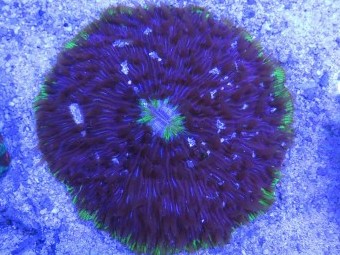
  • Yellow Rim Fungia

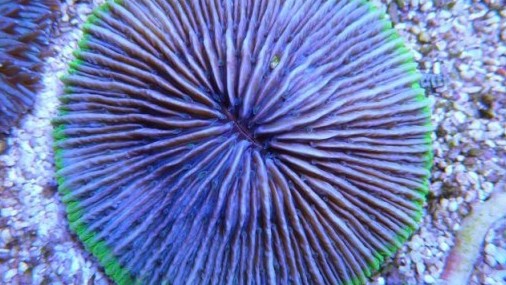
    General information In general, corals coming from the genus Fungia are solitary animals. Unlike your typical coral, Fungia coral is not composed of a colony, but instead, is a  single-polyp coral. It has a flattened skeletal structure that resembles like a disc. Its corallite walls are highly elevated forming plates and their mouth is located…

  • Sunkiss Lime Acan

    General information This is the ideal range of water parameters for raising Sunkiss Lime Acan in captivity: Calcium: 400 – 450 ppm Alkalinity: 3.2 – 4.8 MEQ/L Phosphates: 0 Magnesium: 1200 – 1350 Strontium: 8 – 10 Temperature: 76° – 83° F (24° – 28° C) Salinity / Specific Gravity: 1.023 – 1.025

  • Master Scolymia

    General information In general, corals coming from the genus Scolymia are round solitary corals that has a single mouth located at the center. Their coloration usually has an alternating radial bands with a cup, saucer, flat or dome shaped variations. As for the Master Scolymia, they are predominantly colored violet with orange perpendicular lines, green…

  • Aussie Green Mint Blasto

    General information In general, the Blastomussa corals has many small corallites that is usually swollen and round in shape. When the polyps are out,  the entire colony will look similar to a mushroom anemone. For the Aussie Green Mint Blasto, they are predominatly colored violet with neon green mouth. This are the water parameters for…

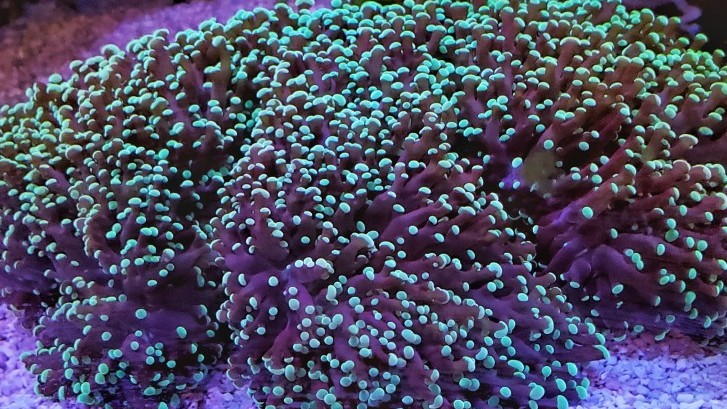
  • Green Rim Fungia

    General information In general, corals coming from the genus Fungia are solitary animals. Unlike your typical coral, Fungia coral is not composed of a colony, but instead, is a  single-polyp coral. It has a flattened skeletal structure that resembles like a disc. Its corallite walls are highly elevated forming plates and their mouth is located…

  • Pink Micro Lord

    General information In the wild, corals coming from the genus Micromussa have colonies that takes the encrusting and massive forms. Their colonies have several corallites that are cerioid in nature and are neatly arranged in an angular pattern. They have a thick mantle that is often fleshy and covered with several papillae. For the Pink…

  • District 9 Mycedium

    General information In general, corals coming from the genus Mycedium takes the flat, laminar plane or plate type of coral growth. Their colonies have several plates that may originate from different points or planes. One distinct characteristics for a Mycedium coral is that their corallites are raised, tubular and has angular outward growth that forms…

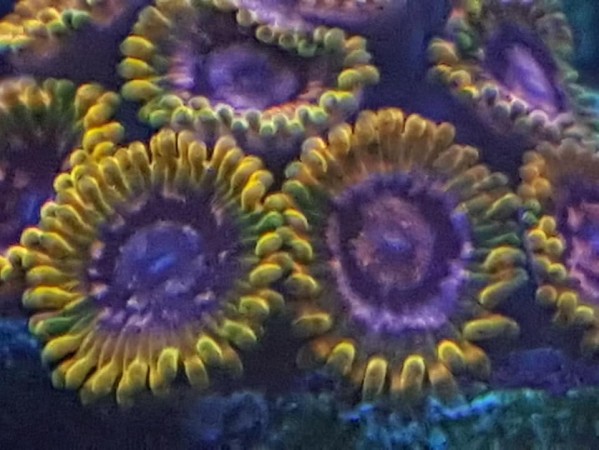
  • Acid Reflux Palys

    General information <div class="more_detail"> <div class="more_detail"> <div class="more_detail">In general, corals coming from the genus Palythoa are classified as zoanthids with colonies that are embedded hard in the substrate and is often covered by its protruding polyps. Each polyp has an oral disc or mouth that is flat in shape and surrounded by a fringe of…