Saltwater

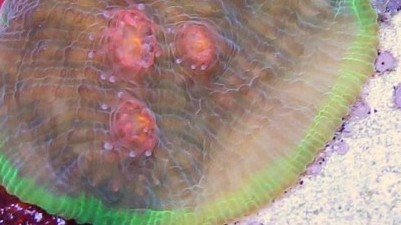
  • Neon Green Leptoseris

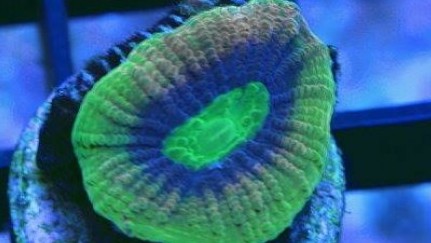
    General information In general, corals from the genus Leptoseris usually take the form of encrusting, foliose or plate type. Their colonies are laminar in nature which forms whorls, folds or tiers. Their corallites are arranged in an irregular pattern that usually runs parallel to the margins. For the Neon Green Leptoseris, they are predominatly colored…
  • Side Winder Favia

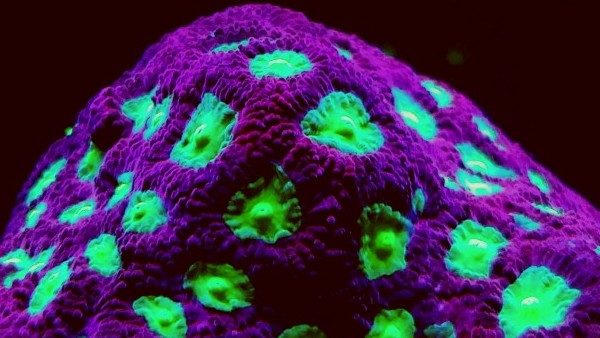
    General information In general, the genus Favia have large coral colonies that are circular in shape and comes in the form of massive, submassive and encrusting type. At a first glance, you can mistakenly identify Favia with Favites. However, with a closer look, Favia and Favites can easily be differentiated. Favites have corallite walls that…

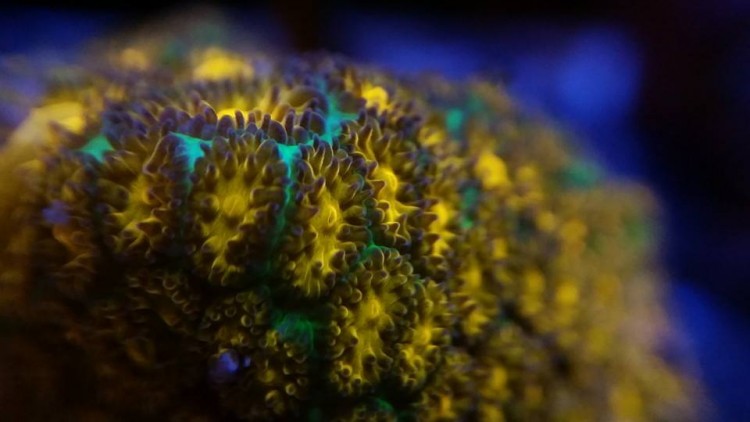
  • Yellow Spectrum Favia

    General information In general, the genus Favia have large coral colonies that are circular in shape and comes in the form of massive, submassive and encrusting type. At a first glance, you can mistakenly identify Favia with Favites. However, with a closer look, Favia and Favites can easily be differentiated. Favites have corallite walls that…

  • Lucky Leprechaun Acan

    General information This is the ideal range of water parameters for raising Lucky Leprechaun Acan in captivity: Calcium: 400 – 450 ppm Alkalinity: 3.2 – 4.8 MEQ/L Phosphates: 0 Magnesium: 1200 – 1350 Strontium: 8 – 10 Temperature: 76° – 83° F (24° – 28° C) Salinity / Specific Gravity: 1.023 – 1.025

  • My Miami Chalice

    General information In general, species from Echinophyllia has an encrusting growth where their colonies can form folds or cups. The corallites that are located at the middle are usually elevated with warty bumps. The color of their mouth usually has a different color from their fleshy body. For the My Miami Echinophyllia, they are predominatly…

  • Orange Leptastrea

    General information In general, corals from genus Leptastrea usually takes the form of encrusting to massive types. They have corallites that are cerioid in shape and colonies that are flat and angular. Their septa has a distinct cycle pattern that forms granulated sides and margins. They are one of the species of corals where their…

  • Pinkish Acan

    General information This is the ideal range of water parameters for raising Pinkish Acan in captivity: Calcium: 400 – 450 ppm Alkalinity: 3.2 – 4.8 MEQ/L Phosphates: 0 Magnesium: 1200 – 1350 Strontium: 8 – 10 Temperature: 76° – 83° F (24° – 28° C) Salinity / Specific Gravity: 1.023 – 1.025

  • Bleeding Sun Favia

    General information In general, the genus Favia have large coral colonies that are circular in shape and comes in the form of massive, submassive and encrusting type. At a first glance, you can mistakenly identify Favia with Favites. However, with a closer look, Favia and Favites can easily be differentiated. Favites have corallite walls that…

  • Eclectus Micromussa

    General information In the wild, corals coming from the genus Micromussa have colonies that takes the encrusting and massive forms. Their colonies have several corallites that are cerioid in nature and are neatly arranged in an angular pattern. They have a thick mantle that is often fleshy and covered with several papillae. For the Eclectus…

  • Mother of Glory Acan

    General information This is the ideal range of water parameters for raising Mother of Glory Acan in captivity: Calcium: 400 – 450 ppm Alkalinity: 3.2 – 4.8 MEQ/L Phosphates: 0 Magnesium: 1200 – 1350 Strontium: 8 – 10 Temperature: 76° – 83° F (24° – 28° C) Salinity / Specific Gravity: 1.023 – 1.025