Horseshoe Crab
Limulus polyphemus
Featured guide
This will pull the most popular / featured article tagged to this species.
Water parameters
Water parameters are being added.
About Horseshoe Crab
General information
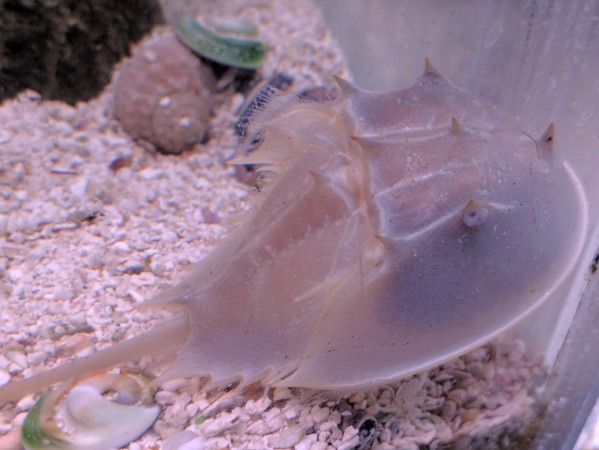
The Horseshoe Crab is greenish brown to light tan in color. The dorsal part of the body is rounded, and it has a long spike for a tail. The Horseshoe Crab is not a crab, but more closely related to spiders and mites, belonging to a group of animals called chelicerates. Horseshoe Crabs can grow quite large. The female horseshoe crabs usually grow larger than the males, with their body reaching a maximum size of 12 inches in diameter. When small, they are very efficient scavengers and are great for aerating and maintaining sand beds. The Horseshoe Crabs dig through sand and gravel in search of worms and any organic debris. It will move the substrate around almost nonstop in its search for food. Horseshoe crabs use hemocyanin to carry oxygen through their blood. Because of the copper present in hemocyanin, their blood is blue.
Diet & nutrition
Horseshoe crab feeds on worms, clams, and algae and usually eats at night. It uses its appendages in front to pick up the food, crushes it with its legs and brings it into its mouth.
Determining sex
Female horseshoe crabs are generally larger than males, and the first pair of their appendages are pincers. Males, on the other hand, are smaller and have mating claws instead of pincers that are used to hold on to the females during mating.
Breeding & spawning
Natural breeding of horseshoe crabs in captivity has been proven to be difficult. However, it may be possible only in the presence of mud or sand where the eggs will be hatched. Some breeders also use artificial insemination and induced spawning.
Origination
Four species of horseshoe crabs exist, one species is found in North America and the three other species are found in Southeast Asia.
Cautions
The back of the horseshoe crab is jagged and sharp, making it risky for humans to interact with, especially on open shores.
While considered reef safe, large horseshoe crabs can be harmful to fish and invertebrates, especially worms and clams.
Acclimation process
When taking the invertebrate out, expose it to as little light as possible and turn the aquarium lights off. Place the invertebrate container bag in the aquarium and let it float for 15 minutes. Open the bag and pour in 1 ounce of aquarium water into it, do so every 5 minutes until the water inside the bag has doubled. Wait for 5 minutes before pouring off half the water inside the bag into the aquarium. Then, slowly place each animal in the aquarium. Turn the aquarium lights on after an hour or more.
Related articles
These will pull posts tagged to this species (not tied to the species record).
All photos
Tap a photo to open the gallery viewer.