Christmas Tree Worm Coral
Spirobranchus porites
Featured guide
This will pull the most popular / featured article tagged to this species.
Water parameters
Water parameters are being added.
About Christmas Tree Worm Coral
General information
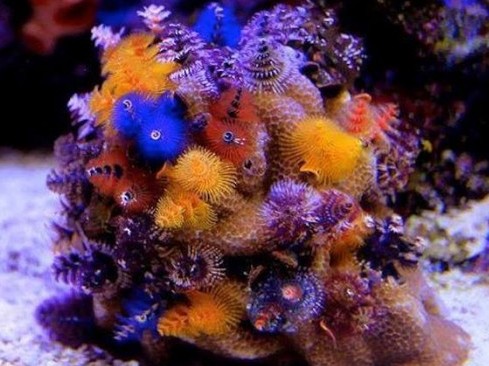
The Christmas Tree Worm crown comes in a variety of different colors and they grow to about 3.8 cm (1.49 in). Usually, just the crown, which is spiraled in the shape of a Christmas tree, is seen; its body is hidden within the host coral. It has an operculum (top trap door) that covers its tube when it withdraws its crown. There are often several Christmas Tree Worms in the same area, though they do not live in close groups. The Christmas Tree Worm is somewhat shy of movement and prefers to be in the shade of rocky overhangs, out of the bright light.
Diet & nutrition
Christmas tree worms are filter feeders that use their radioles when feeding. Radioles are hair-like appendages that look like feathers circling around the central spine. Their diet mostly consists of phytoplankton.
Determining sex
Sexing the Christmas Tree Worm is difficult because some Spirobranchus genus are hermaphrodites.
Breeding & spawning
Christmas Tree Worms do not make physical contact when spawning. They merely release their sperm and egg into the water which, upon meeting, fertilize and become an embryo. The embryo develops into larva within 24 hours and settles and burrows on the coral. This phenomenon happens naturally, and they spawn the area together at the same time.
Origination
Christmas Tree Worms can be found on coral reefs around the world.
Cautions
It is very intolerant of copper-based medications.
Related articles
These will pull posts tagged to this species (not tied to the species record).
All photos
Tap a photo to open the gallery viewer.