Shepards Pygmy Angelfish
Centropyge shepardi
Featured guide
This will pull the most popular / featured article tagged to this species.
Water parameters
Water parameters are being added.
About Shepards Pygmy Angelfish
General information
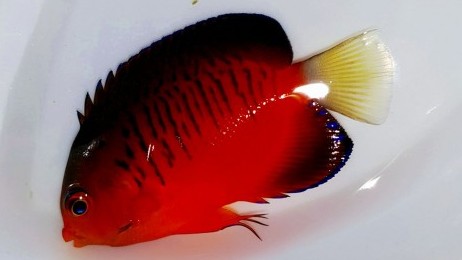
Reaching just over 4 3/4 inches (12 cm) in length, the Shepards Pygmy Angelfish Centropyge shepardi have a beautiful colorations ranging from apricot to an orangish red. Its head and body have an apricot to an almost red coloration, and darkening toward the dorsal fin area. This species is a relatively peaceful and hardy fish that make a vibrant showpiece in the community saltwater aquarium.
Diet & nutrition
This species is an omnivore but mostly feeds on benthic algae. In tank conditions it readily feeds on frozen and live food materials with a good supply of natural algae foods containing copepods, other small edibles, and diatoms.
Determining sex
Just like other Centropyge species, they are prototgynous hermaphrodites that changes sex, from female to male, when the need arises. Male Shepards Pygymy angelfish is larger with blue patch behind their gill plates as well as blue edging and/or dots on the back of both the anal and dorsal fins.
Breeding & spawning
The Shepard’s Pygmy Angelfish are broadcast spawners, releasing eggs and sperm in the water column simultaneously. The eggs will hatch in just under a day, then within 2 to 3 days they need microscopic algae for their very small mouths. Courtship begins at dusk when male soars above the female, hovers with his fins extended, and tilts at a 45-90 degree angle from the bottom. When the female is ready to spawn, it follows the male and initiates spawning with a mutual soaring display.
It can spawn together in the tank with other Centropyge species such as Coral Beauties and Flame Angelfish, prducing color variations that may be available in any future successful captive bred specimens.
Diseases
Multicolor angelfish can be susceptible to common reef scourges such as Crypt or White Spot Disease, Velvet Disease, and bacterial infection.
Tiny white spots on the skin of the fish is one of the tell-tale sign of infection of the Crypt while dusty golden film on the skin or the eyes of the angelfish will detect the presence of Velvet Disease. As a secondary infection from the parasitic and protozoan diseases, this species are known to be vulnerable to bacterial infection. One major bacteria of concern is the Vibrio bacteria. It usually starts as an infection that turns into Dropsy, Popeye, Bleeding or Red Streaks on the skin. It is a very fast acting bacteria that can kill the fish within two days.
Origination
The species are found in the exposed outer reef slopes of the Western Pacific region particularly in the Northern Marianas Island, and the Ogasawara Island in Japan.
Cautions
Shepards pygmy angelfish are easy to moderate to care for since they are one of the least aggressive dwarf angelfish. It is recorded to get along with other tank species if they are the only dwarf angelfish in the aquarium, otherwise the opposite will be observed. Provided with plenty of space, this behavior will be avoided.
When adding into the tank with other dwarf angelfish, they should be added simultaneously.
Acclimation process
Provide this species with plenty of mature rocks to graze and hide in for better acclimation in the tanks.
Related articles
These will pull posts tagged to this species (not tied to the species record).
All photos
Tap a photo to open the gallery viewer.