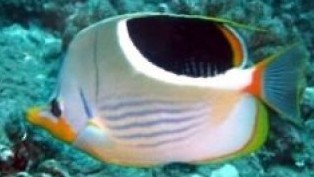
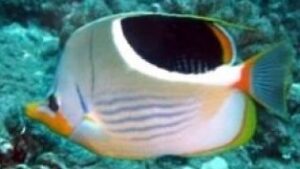
Saddleback Butterflyfish
Chaetodon ephippium
Featured guide
This will pull the most popular / featured article tagged to this species.
Water parameters
Water parameters are being added.
About Saddleback Butterflyfish
General information
The Saddleback Butterflyfish, also known as the Melon Butterflyfish, is a species of marine fish belonging to the family Chaetodontidae. They are native to the Indo-Pacific region and can be found in coral reefs, lagoons, and outer reef slopes at depths ranging from 3 to 40 meters. They are relatively small in size, reaching an average length of 15-20 centimeters.
In the aquarium, Saddleback Butterflyfish require a tank of at least 125 gallons with plenty of hiding spots and ample swimming space. They are not aggressive towards other fish, but may become territorial towards their own species.
Diet & nutrition
Saddleback Butterflyfish are omnivores and feed on a variety of foods in the wild, including small invertebrates, algae, and coral polyps. In the aquarium, they can be fed a diet of frozen or live brine shrimp, mysis shrimp, and spirulina-based flake or pellet foods. They may also enjoy occasional feedings of chopped seafood or marine algae.
Determining sex
There are no external differences between male and female Saddleback Butterflyfish.
Breeding & spawning
Saddleback Butterflyfish are known to spawn in pairs or small groups. Breeding in captivity is challenging and has not been widely documented.
Diseases
Saddleback Butterflyfish are generally hardy and resistant to disease when kept in proper water conditions. However, they may be susceptible to parasitic infections, such as marine velvet or ich, if kept in poor water quality.
Origination
Saddleback Butterflyfish are native to the Indo-Pacific region, including the Red Sea, the Maldives, and the Great Barrier Reef.
Cautions
Saddleback Butterflyfish are not known to be aggressive, but may become territorial towards their own species or similar-looking fish. It is important to provide plenty of hiding spots and swimming space to minimize aggression.
Acclimation process
When introducing Saddleback Butterflyfish to a new aquarium, it is important to acclimate them slowly over a period of several hours. This can be done by floating the bag containing the fish in the aquarium water and gradually adding small amounts of the aquarium water to the bag over time. Once the temperature and water chemistry in the bag match that of the aquarium, the fish can be safely released into the tank.
Related articles
These will pull posts tagged to this species (not tied to the species record).
All photos
Tap a photo to open the gallery viewer.