Purple Queen Anthias
Pseudanthias pascalus
Featured guide
This will pull the most popular / featured article tagged to this species.
Water parameters
Water parameters are being added.
About Purple Queen Anthias
General information
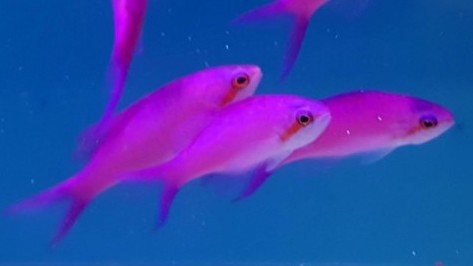
The Purple Queen Anthias is a strikingly beautiful, small-sized fish with a vibrant purple coloration. They have a deep, compressed body with a pointed snout, and they typically grow up to 4 inches in length. This species is highly sought after by aquarists due to their striking appearance and peaceful nature. They are best kept in groups of six or more individuals, as they tend to be more active and display their natural behaviors when kept in larger groups.
Diet & nutrition
In the wild, Purple Queen Anthias feed on zooplankton, crustaceans, and small fish. In captivity, they can be fed a varied diet consisting of high-quality frozen or live foods such as brine shrimp, mysis shrimp, krill, and small pieces of fresh seafood.
Determining sex
The males of the Purple Queen Anthias have more pointed dorsal and anal fins than the females, and their overall coloration may be more vibrant.
Breeding & spawning
Purple Queen Anthias are egg layers and have not been bred in captivity.
Diseases
Common diseases that affect the Purple Queen Anthias include bacterial and fungal infections, as well as parasitic infections such as ich.
Origination
The Purple Queen Anthias is native to the Western Pacific Ocean, specifically in the waters around the Philippines and Indonesia.
Cautions
The Purple Queen Anthias is generally considered to be a peaceful species and is not known to be aggressive towards other tankmates. However, they may become stressed if kept with more aggressive species, so it is important to choose tankmates carefully.
Acclimation process
When introducing the Purple Queen Anthias to a new tank, it is important to acclimate them slowly to prevent stress or shock. The fish should be placed in a container with water from their original environment, and small amounts of water from the new tank should be gradually added over a period of several hours until the container is filled with water from the new tank.
Related articles
These will pull posts tagged to this species (not tied to the species record).
All photos
Tap a photo to open the gallery viewer.