Orbiculate Cardinalfish
Sphaeramia orbicularis
Featured guide
This will pull the most popular / featured article tagged to this species.
Water parameters
Water parameters are being added.
About Orbiculate Cardinalfish
General information
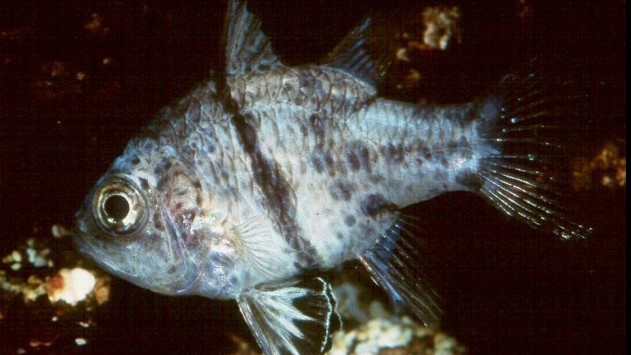
The Orbiculate Cardinalfish (Sphaeramia orbicularis) is a small, peaceful and colorful fish species that is popular among hobbyists. It typically grows up to 3 inches (7.6 cm) in length and has a round body shape with bright red coloration on its head and upper body, and yellow or orange coloration on its lower body. This species is suitable for smaller aquariums, as it can adapt well to different water conditions.
Diet & nutrition
The Orbiculate Cardinalfish is omnivorous and its diet should consist of a variety of small meaty and vegetable matter, such as brine shrimp, plankton, mysis shrimp, flake foods, and other prepared foods. It is important to provide a balanced diet to maintain its health.
Determining sex
There is no easy way to determine the sex of Orbiculate Cardinalfish visually. It is best to obtain a group of juveniles and allow them to pair off naturally.
Breeding & spawning
The Orbiculate Cardinalfish can breed in captivity, and it is best to provide a breeding pair with their own aquarium. The breeding process usually involves the female laying eggs in a nest made by the male, and then the male fertilizing them. The eggs will hatch after a few days, and the fry will need to be fed small amounts of food several times a day.
Diseases
The Orbiculate Cardinalfish is generally hardy and resistant to disease, but it is still susceptible to some common saltwater fish diseases, such as ich, velvet, and fin rot. It is important to keep the water quality high and provide a healthy diet to prevent disease outbreaks.
Origination
The Orbiculate Cardinalfish is native to the Indo-Pacific region, including the waters around Fiji, Indonesia, and the Philippines.
Cautions
The Orbiculate Cardinalfish is generally a peaceful species and can be kept with other non-aggressive fish species. However, it is important to provide hiding places and ample swimming space to reduce any potential territorial behavior.
Acclimation process
When introducing the Orbiculate Cardinalfish to a new aquarium, it is important to acclimate them slowly to prevent shock. This can be done by floating the bag with the fish in the aquarium for 10-15 minutes to allow the water temperature to adjust and then slowly adding small amounts of water from the aquarium to the bag over a period of several hours.
Related articles
These will pull posts tagged to this species (not tied to the species record).
All photos
Tap a photo to open the gallery viewer.