
Longnose Batfish
Ogcocephalus corniger
Saltwater Fish
Species Group: Batfish
Family: Ogcocephalidae
Log in or create an account to add this species to your tanks.
Water parameters
Temp
76-80 F
Temperature
Maintaining a stable and appropriate temperature is critical for the survival of aquatic life.
pH 7.8 - 8.4 potential of HydrogenMeasuring the acidity or alkalinity of water on a 0–14 scale, where 7 is neutral, 7 is alkaline.
NO3 1-20 ppm NitrateWhile less toxic than ammonia, high nitrate levels (above 40–80 ppm) are important to monitor because they can cause fish stress, stunted growth, and harmful algae blooms.
NO2 <0.0001 ppm NitriteIt is a highly toxic, intermediate compound in the nitrogen cycle produced from broken-down ammonia
PO4 0.01 - 0.1 ppm PhosphateIt is essential for plant development but must be managed, as excess levels trigger nuisance algae blooms and inhibit coral calcification.
NH3 <0.1 ppm AmmoniaIt is the primary killer of aquarium fish, causing gill damage, stress, and death
Ca 380 - 450 ppm CalciumSupporting the growth, skeletal structure, and shell formation of corals, mollusks, crustaceans, and coralline algae
KH 8 - 12 dKH AlkalinityIt acts as a shield, neutralizing acids to prevent dangerous pH "crashes" that can harm fish, corals, and plants.
Mg 1200 - 1400 ppm MagnesiumIt enables coral growth by supporting skeletal formation, assists in metabolic processes, and ensures that calcium is available for corals, clams, and coralline algae.
SG 1.023 - 1.026 SG SalinityEssential for maintaining stable, natural water parameters, proper osmoregulation, and stress-free environments for marine fish and corals
ORP 250 - 400 mV Oxidation-Reduction PotentialA higher positive mV indicates clean, oxygen-rich water with high water quality, while low readings indicate high pollution.
About Longnose Batfish
General information
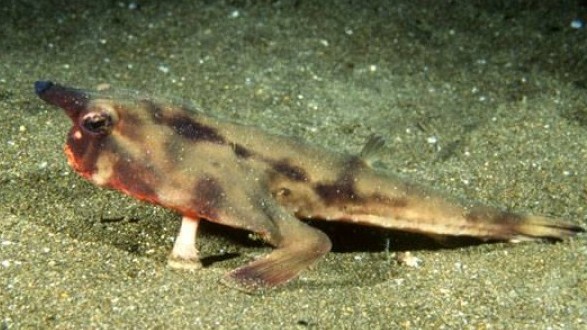
The Longnose Batfish has a horizontally flattened body, mottled reddish-brown to a dark tan; it may have dark spots on the sides and fins. In behavior, it is closely related to frogfish. The Longnose Batfish has a moveable antennae-like structure on its nose. When hungry, the Longnose nearly freezes on the sea floor, moving this antenna back and forth. When a small fish gets curious and moves in for inspection, the Longnose opens its mouth and sucks in the unsuspecting victim. The Longnose is a very poor swimmer but has developed very strong pectoral and pelvic fins that it uses as hands and feet to creep along the sea floor. The Longnose Batfish has been seen jumping, crawling and even walking on all fours. When threatened, the Longnose Batfish immediately buries itself in the sandy bottom. Because of its slow locomotion, it cannot even begin to compete with fast-moving fish, so tankmates must be chosen with this in mind. The Longnose Batfish needs an aquarium of at least 70 gallons with a sand/gravel/loose mud substrate. This and dim lighting will provide the best environment for this fish.
The Longnose Batfish (Ogcocephalus corniger) is a unique-looking fish species with a long, slender snout and a flattened body. It can grow up to 10 inches in length and is suitable for large aquariums with ample swimming space. They are generally peaceful fish that can be kept in groups with other non-aggressive fish species. However, it is important to note that they can be slow swimmers and may struggle to compete for food with faster fish species.
Diet & nutrition
Longnose Batfish are carnivorous and feed primarily on small fish and crustaceans. They are known to eat small invertebrates and other fish that can fit in their mouths. In captivity, they can be fed a diet of live or frozen meaty foods such as shrimp, krill, and fish.
Determining sex
There is no reliable method to determine the sex of Longnose Batfish in the aquarium.
Breeding & spawning
Breeding Longnose Batfish in captivity is rare and there is limited information available on their breeding habits.
Diseases
Longnose Batfish are generally hardy and not prone to any specific diseases. However, as with all fish species, they are susceptible to common fish diseases such as ich, fin rot, and bacterial infections. It is important to maintain good water quality and provide a balanced diet to minimize the risk of disease.
Origination
Longnose Batfish are native to the Western Atlantic Ocean, from North Carolina to Brazil, including the Gulf of Mexico and the Caribbean Sea.
Cautions
Longnose Batfish are not known to be aggressive towards humans, but they can inflict painful bites if they feel threatened. They have been known to leap out of aquariums, so it is important to ensure that the aquarium has a tight-fitting lid to prevent escape.
Acclimation process
Longnose Batfish should be acclimated slowly to their new environment, over a period of at least an hour, to allow them to adjust to the water conditions.
All photos
Tap a photo to open the gallery viewer.