Harlequin Basslet
Serranus tigrinus
Featured guide
This will pull the most popular / featured article tagged to this species.
Water parameters
Water parameters are being added.
About Harlequin Basslet
General information
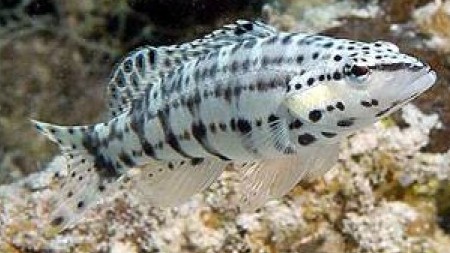
The Harlequin Basslet is a small, colorful fish that is commonly found in the tropical Western Atlantic. It typically grows up to 3 inches in length and has a striking appearance with a bright orange body, black and white stripes, and large eyes. This species can be kept in a reef aquarium with caution, as it may eat smaller invertebrates such as shrimp and crabs.
Diet & nutrition
In the wild, the Harlequin Basslet feeds on a diet of small crustaceans and plankton. In captivity, it can be fed a varied diet of meaty foods such as mysis shrimp, brine shrimp, and small pieces of fish. It is important to provide a balanced diet that includes both meaty foods and algae-based foods.
Determining sex
It is difficult to determine the sex of Harlequin Basslets visually, as they do not exhibit any sexual dimorphism. However, males may be slightly larger than females.
Breeding & spawning
Breeding and spawning in captivity is rare for Harlequin Basslets. In the wild, they are known to spawn in pairs or small groups on rocky reefs.
Diseases
Harlequin Basslets are generally hardy fish and not prone to many diseases if kept in a clean and stable aquarium. However, they can be susceptible to common fish diseases such as ich and velvet if water quality is not maintained.
Origination
The Harlequin Basslet is native to the tropical Western Atlantic, including the Caribbean Sea and Gulf of Mexico.
Cautions
The Harlequin Basslet can be aggressive towards other smaller fish in the aquarium. It should not be kept with other basslets or similar species.
Acclimation process
When introducing a Harlequin Basslet to a new aquarium, it is important to acclimate it slowly to prevent stress and potential disease. This can be done by gradually adjusting the water parameters and temperature over a period of several hours.
Related articles
These will pull posts tagged to this species (not tied to the species record).
All photos
Tap a photo to open the gallery viewer.