Cortez Angelfish
Pomacanthus zonipectus
Featured guide
This will pull the most popular / featured article tagged to this species.
Water parameters
Water parameters are being added.
About Cortez Angelfish
General information
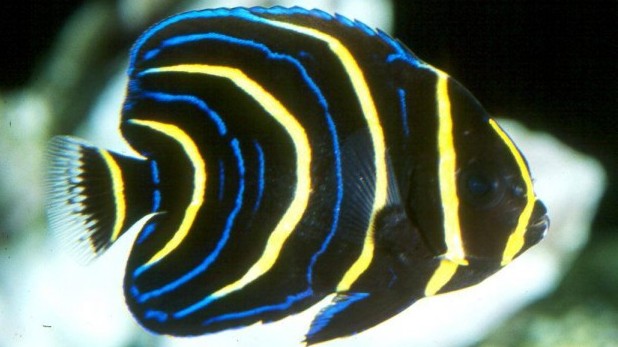
The coloration of the Cortez Angelfish varies markedly from juvenile to adult. The juvenile stage is black with yellow and blue semi-circular striping radiating from the tail. As an adult, the Cortez Angelfish is blue, with a pale, speckled mid-section and a swipe of vertical yellow just behind the head. The long, dorsal fin is a green-blue while the head is blue with yet another yellow vertical swipe just behind the eye. The Cortez Angelfish requires a large tank and should be the only angelfish in the tank, even as juveniles. Not a good candidate for a reef tank, the Cortez Angelfish eat sponges, and will also consume stony and soft corals (sessile invertebrates) and clam mantles.
Diet & nutrition
This angelfish primarily feeds on sponges but is also supplemented by tunicates, algae, bryozoans, hydroids and eggs. In tank conditions, it should be provided with a diet of Spirulina, marine algae, shrimp and other meaty items, and high-quality angelfish preparations containing sponges.
Breeding & spawning
Cortez angelfish often form pairs and have been observed spawning seasonally in similar manner; gametes are released in unison toward the surface, planktonic eggs floating with the current.
Diseases
Cortez angelfish have a high tolerance for parasites and diseases in their immediate surroundings which make Cortez angelfish very sturdy fish to keep as pets. If not kept in tanks with optimum condition, they are susceptible to the common saltwater diseases such as Angelfish Virus, White Spot Disease, Velvet Disease, and Head and lateral line erosion (HLLE).
Origination
The Cortez angelfish is widely distributed in the eastern Pacific region. It ranges from the northern Gulf of California (from Puerto Peñasco, Mexico) in the north, to Peru in the south.
Cautions
These angels are curious and friendly by nature. It has a tendency to become aggressive with other members of their own kind, other angels and other similarly marked fishes when provoked. They are solitary and fiercely territorial on the reef as adults.
Acclimation process
When adding into new tanks, this species should be run through a freshwater bath to remove parasites and microbes. The tanks should have plenty of rock works for their hiding place when threatened.
Related articles
These will pull posts tagged to this species (not tied to the species record).
All photos
Tap a photo to open the gallery viewer.