
Clown Wartskin Angler
Antennarius maculatus
Saltwater Fish
Species Group: Anglers and Frogfish
Family: Frogfish
Log in or create an account to add this species to your tanks.
Water parameters
Temp
76-80 F
Temperature
Maintaining a stable and appropriate temperature is critical for the survival of aquatic life.
pH 7.8 - 8.4 potential of HydrogenMeasuring the acidity or alkalinity of water on a 0–14 scale, where 7 is neutral, 7 is alkaline.
NO3 1-20 ppm NitrateWhile less toxic than ammonia, high nitrate levels (above 40–80 ppm) are important to monitor because they can cause fish stress, stunted growth, and harmful algae blooms.
NO2 <0.0001 ppm NitriteIt is a highly toxic, intermediate compound in the nitrogen cycle produced from broken-down ammonia
PO4 0.01 - 0.1 ppm PhosphateIt is essential for plant development but must be managed, as excess levels trigger nuisance algae blooms and inhibit coral calcification.
NH3 <0.1 ppm AmmoniaIt is the primary killer of aquarium fish, causing gill damage, stress, and death
Ca 380 - 450 ppm CalciumSupporting the growth, skeletal structure, and shell formation of corals, mollusks, crustaceans, and coralline algae
KH 8 - 12 dKH AlkalinityIt acts as a shield, neutralizing acids to prevent dangerous pH "crashes" that can harm fish, corals, and plants.
Mg 1200 - 1400 ppm MagnesiumIt enables coral growth by supporting skeletal formation, assists in metabolic processes, and ensures that calcium is available for corals, clams, and coralline algae.
SG 1.023 - 1.026 SG SalinityEssential for maintaining stable, natural water parameters, proper osmoregulation, and stress-free environments for marine fish and corals
ORP 250 - 400 mV Oxidation-Reduction PotentialA higher positive mV indicates clean, oxygen-rich water with high water quality, while low readings indicate high pollution.
About Clown Wartskin Angler
General information
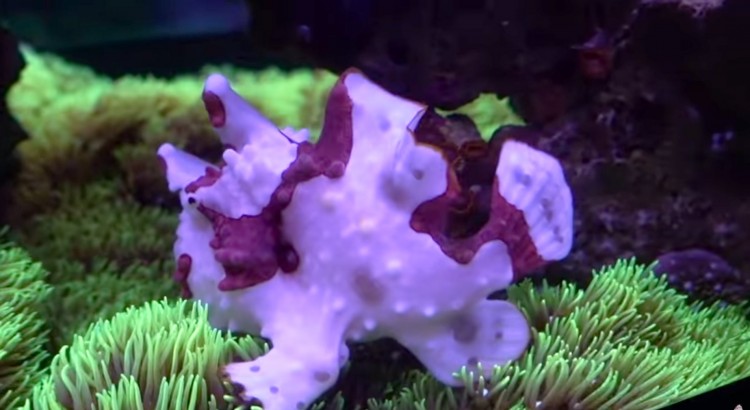
The warty frogfish or clown frogfish soft skin is covered with numerous small, wart-like protuberances. Its large mouth allows it to consume prey the same size as the angler size. Frogfishes have the capacity to change their pigment color and pattern to their surroundings this process could take a few weeks. they are ambush predators and tend to blend into their environment. They use their bottom fins to hold on to things as well as to move around, most time other fish do not know they are there until it is too late. Should not be kept with smaller fish, keep in mind in the wild they are known to reach lengths of up to 5.9″ so while they may be small at first they could grow and eventually eat other fish in the tank.
Diet & nutrition
Frogfish are carnivores and ambush feeders, lying in wait for an unsuspecting fish or crustacean to go by and then the frog fish opens its mouth quickly while lunging forward, sucking their victim whole and swallowing them. Also called the Gape and Suck, the frogfish has one of the fastest gape and suck of any fish. They have been known to devour fish nearly equal to its size. A diet of feeder fish and shrimp should be provided.
Determining sex
There is no way to determine if they are male or female frogfish without examining the gonads by dissection. For example, sex can't be determined by coloration or size. While spanning the male is typically smaller.
Breeding & spawning
8 to 12 hours before spawning, the female will begins to fill up with eggs (40'000 to 180'000 eggs) — the eggs measure around half a millimeter. From here on out, everything happens quickly. The female will become swollen before she is ready to spawn. All the eggs will make it is hard for the female to maintain her position and will eventually become buoyant with her tail up. The mail will follow the female closely once she becomes buoyant the male will nudge the female continues in the abdomen, then they both move to the surface, where spawning occurs. The female will start to release thousands of eggs and the male will start fertilizing them immediately and it all happens quickly.
The eggs will float to the surface of the water and will be covered in a layer of mucus.
The male will stay near the fertile female how the frogfish may spawn several times over several weeks.
All photos
Tap a photo to open the gallery viewer.