
Blueface Angelfish
Pomacanthus xanthometopon
Saltwater Fish
Species Group: Angel Large
Family: Pomacanthidae
Log in or create an account to add this species to your tanks.
Water parameters
Temp
76-80 F
Temperature
Maintaining a stable and appropriate temperature is critical for the survival of aquatic life.
pH 7.8 - 8.4 potential of HydrogenMeasuring the acidity or alkalinity of water on a 0–14 scale, where 7 is neutral, 7 is alkaline.
NO3 1-20 ppm NitrateWhile less toxic than ammonia, high nitrate levels (above 40–80 ppm) are important to monitor because they can cause fish stress, stunted growth, and harmful algae blooms.
NO2 <0.0001 ppm NitriteIt is a highly toxic, intermediate compound in the nitrogen cycle produced from broken-down ammonia
PO4 0.01 - 0.1 ppm PhosphateIt is essential for plant development but must be managed, as excess levels trigger nuisance algae blooms and inhibit coral calcification.
NH3 <0.1 ppm AmmoniaIt is the primary killer of aquarium fish, causing gill damage, stress, and death
Ca 380 - 450 ppm CalciumSupporting the growth, skeletal structure, and shell formation of corals, mollusks, crustaceans, and coralline algae
KH 8 - 12 dKH AlkalinityIt acts as a shield, neutralizing acids to prevent dangerous pH "crashes" that can harm fish, corals, and plants.
Mg 1200 - 1400 ppm MagnesiumIt enables coral growth by supporting skeletal formation, assists in metabolic processes, and ensures that calcium is available for corals, clams, and coralline algae.
SG 1.023 - 1.026 SG SalinityEssential for maintaining stable, natural water parameters, proper osmoregulation, and stress-free environments for marine fish and corals
ORP 250 - 400 mV Oxidation-Reduction PotentialA higher positive mV indicates clean, oxygen-rich water with high water quality, while low readings indicate high pollution.
About Blueface Angelfish
General information
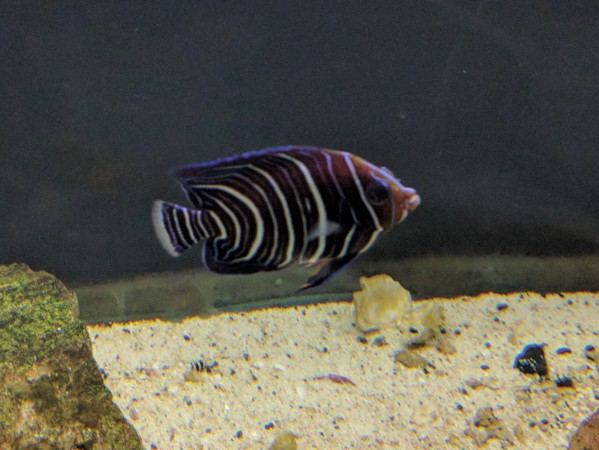
The adult and juvenile Blueface Angelfish differ markedly in coloration. As a juvenile, the body is covered with alternating vertical stripes of black, white, and sapphire blue. Upon growing to approximately five inches, the juvenile begins to morph into its adult coloration of pale yellow with bluish scales and a bright-yellow pectoral fin. It has a mottled-blue face with a yellow mask that extends from eye to eye but not much beyond each eye. There is also an eyespot at the caudal end of the dorsal fin. A large tank with numerous hiding places and large amounts of live rock for grazing will offer a good environment. Not a good reef dweller, the Blueface Angelfish is prone to nip at stony and soft corals (sessile invertebrates) and clam mantles. The Blueface Angelfish is best kept as the only angelfish, as it is prone to becoming territorial when it is the largest fish in the tank.
Blueface angelfish are one of the reef inhabitants that communicate by making grunts which are audible to divers. They make these sounds to defend their territory against other competing blueface angelfish.
Diet & nutrition
The Bluefaced angelfish feeds mainly on sponges and tunicates. It has also been observed to feed on algae and other encrusting organisms. In the tank they may be fed with food preparations containing vegetable based materials containing sponge and meaty food such as chopped squid, scallops, and shrimp.
Determining sex
Sexual dimorphism has not been observed for the Bluefaced angelfish.
Breeding & spawning
Breeding has not yet been done in captivity as well as larval rearing in the tank. However, they form lasting pairs in the wild and display a "happy" dance when they reunite with their mates after being separated for some time. In the wild, Bluefaced Angelfish have been observed to hybridize with the Sixbar Angelfish or Sixbanded Angelfish Pomacanthus sexstriatus and with the Blue-girdled Angelfish or Majestic Angelfish Pomacanthus navarchus.
Diseases
Highly prone to physical stress if not placed in a large tank.
Origination
This species is found in the eastern part of the tropical Indo-Pacific. Its range includes the Maldive Islands, Malaysia, Indonesia, Japan, Taiwan, the Philippines, northern Australia and Micronesia.
Cautions
Adult Bluefaced angelfish may pick on are large polyp stony (LPS) corals, zoanthids and other polyp corals, along with Tridacnid clams and other similar invertebrates.
It is a sem-aggressive species when interacting with other fishes such as gobies, clownfish and blennies and more peaceful tankmates if the aquarium is cramped. Should not be kept with other angelfish, fishes that are of similar sized and color, and more aggressive fishes.
Acclimation process
Provide plenty of hiding places in the tank, since the Bluefaced angelfish is especially associated with areas that have caves and large crevices. Requires a mature and established tank, at least 220 gallons for adults, with sponge, tunicate and algal growth.

All photos
Tap a photo to open the gallery viewer.