
Banded Pipefish
Doryrhamphus dactylophorus
Saltwater Fish
Species Group: Pipefish
Family: Syngnathidae
Log in or create an account to add this species to your tanks.
Water parameters
Temp
76-80 F
Temperature
Maintaining a stable and appropriate temperature is critical for the survival of aquatic life.
pH 7.8 - 8.4 potential of HydrogenMeasuring the acidity or alkalinity of water on a 0–14 scale, where 7 is neutral, 7 is alkaline.
NO3 1-20 ppm NitrateWhile less toxic than ammonia, high nitrate levels (above 40–80 ppm) are important to monitor because they can cause fish stress, stunted growth, and harmful algae blooms.
NO2 <0.0001 ppm NitriteIt is a highly toxic, intermediate compound in the nitrogen cycle produced from broken-down ammonia
PO4 0.01 - 0.1 ppm PhosphateIt is essential for plant development but must be managed, as excess levels trigger nuisance algae blooms and inhibit coral calcification.
NH3 <0.1 ppm AmmoniaIt is the primary killer of aquarium fish, causing gill damage, stress, and death
Ca 380 - 450 ppm CalciumSupporting the growth, skeletal structure, and shell formation of corals, mollusks, crustaceans, and coralline algae
KH 8 - 12 dKH AlkalinityIt acts as a shield, neutralizing acids to prevent dangerous pH "crashes" that can harm fish, corals, and plants.
Mg 1200 - 1400 ppm MagnesiumIt enables coral growth by supporting skeletal formation, assists in metabolic processes, and ensures that calcium is available for corals, clams, and coralline algae.
SG 1.023 - 1.026 SG SalinityEssential for maintaining stable, natural water parameters, proper osmoregulation, and stress-free environments for marine fish and corals
ORP 250 - 400 mV Oxidation-Reduction PotentialA higher positive mV indicates clean, oxygen-rich water with high water quality, while low readings indicate high pollution.
About Banded Pipefish
General information
The Banded Pipefish is a type of reef pipefish or flagtail pipefish. This fish is a stronger swimmer than its seahorse cousins and rarely comes into direct contact with the substrate. In the wild, the Banded Pipefish can be found swimming under rocky overhangs, corals, or close to the floor of its reef habitat.
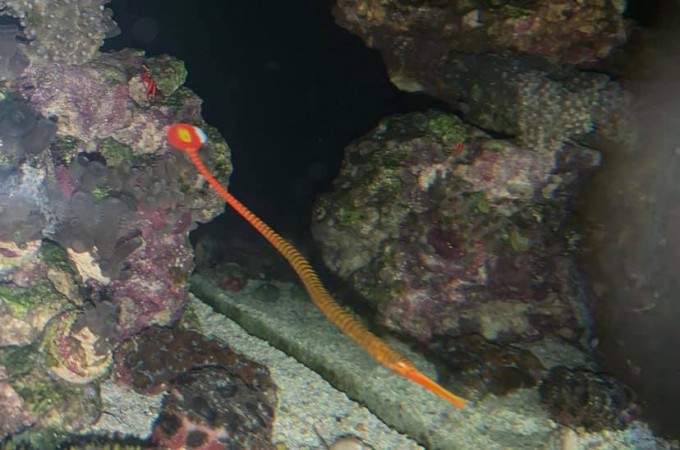
The Banded Pipefish has a long, slender body with a tiny, tubular mouth and an oval, flag-like tail. The body is creamy white with dark red to black vertical rings from the snout to the tail. The tail is bright red with a white margin and dot in the center. After an elaborate courtship dance, the female will attach her adhesive eggs to the flat area on the underside of the male's trunk. A pair will regularly mate in an aquarium if well-fed. It is not easy to determine gender, but mature males typically have a flattened appearance due to the brood patch, while females are more round. This social species is best kept in mated pairs or groups of its own kind in a medium or large sized tank. It may be kept with small, shy fish such as small gobies, seahorses, dragonets, and firefish. Aggressive, territorial, or fast-moving fish do not make good companions. Pipefish will be harmed by anemones and corals with stinging tentacles or corals that are large enough to consume them, such as brain corals. Pipefish can also be harmed by invertebrates such as crabs and large shrimp.
All photos
Tap a photo to open the gallery viewer.