Atlantic Spadefish
Chaetodipterus faber
Featured guide
This will pull the most popular / featured article tagged to this species.
Water parameters
Water parameters are being added.
About Atlantic Spadefish
General information
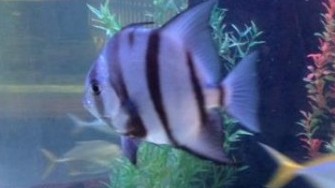
The Atlantic Spadefish is a unique looking saltwater fish species that is known for its large size and distinctive body shape. It can grow up to 3 feet in length and can weigh up to 15 pounds. The Atlantic Spadefish has a compressed, oval-shaped body with a steep forehead and a prominent, triangular dorsal fin. Its coloration is usually a white or silver base with several black vertical bands running the length of the body.
Diet & nutrition
In the wild, the Atlantic Spadefish feeds primarily on small invertebrates such as crustaceans, mollusks, and worms. In captivity, they should be fed a varied diet consisting of high-quality marine flakes, frozen or live brine shrimp, and other small invertebrates.
Determining sex
Determining the sex of an Atlantic Spadefish can be challenging, as there are no distinct physical differences between males and females. In some cases, the male may have slightly larger and more elongated dorsal and anal fins, but this is not a reliable method for sexing the fish.
Breeding & spawning
Not much is known about the breeding and spawning habits of the Atlantic Spadefish in captivity. In the wild, they spawn during the summer months, with the eggs hatching within 24 hours.
Diseases
The Atlantic Spadefish is generally a hardy species that is not prone to many diseases if kept in a clean and well-maintained aquarium. However, they are susceptible to common fish diseases such as ich, fin rot, and bacterial infections.
Origination
The Atlantic Spadefish is native to the western Atlantic Ocean, ranging from Massachusetts to Brazil, including the Gulf of Mexico and the Caribbean Sea. They can be found in both shallow and deep waters, usually near rocky reefs and structures.
Cautions
The Atlantic Spadefish is generally not aggressive towards other fish, but they can be territorial and may become aggressive towards fish of similar size or shape. They are also known to be avid jumpers and require a tightly secured aquarium lid to prevent escape.
Acclimation process
The Atlantic Spadefish should be acclimated slowly to their new aquarium environment to reduce stress and minimize the risk of disease. The acclimation process should take at least an hour and involves gradually adding small amounts of aquarium water to the bag or container holding the fish.
Related articles
These will pull posts tagged to this species (not tied to the species record).
All photos
Tap a photo to open the gallery viewer.