Angel Baby Favia
Favia sp
Featured guide
This will pull the most popular / featured article tagged to this species.
Water parameters
Water parameters are being added.
About Angel Baby Favia
General information
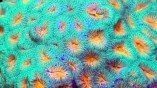
In general, the genus Favia has large coral colonies that are circular in shape and comes in the form of massive, submassive and encrusting type. At first glance, you can mistakenly identify Favia with Favites. However, with a closer look, Favia and Favites can easily be differentiated. Favites have corallite walls that are fused while Favia species are not where each corallite has its own wall. You can clearly see this difference when the polyps are retracted.
This is the water parameters for cultivating Angel Baby Favia:
- Calcium: 400 – 450 ppm
- Alkalinity: 2.86 – 3.93 MEQ/L (8 – 11 dKH)
- Phosphates: 0
- Magnesium: 1200 – 1350
- Strontium: 8 -10
- Temperature: 74° – 83° F (23° – 28° C)
- Salinity / Specific Gravity: 1.023 – 1.025
Diet & nutrition
Angel Baby Favia can survive without feeding courtesy from the nourishment it receives from the symbiotic zooxanthellae that are living within them. However, they will not grow into a bigger colony. With this and for faster growth, you need to feed them with supplemental foods like krill, mysis or brine shrimp. The addition of dissolved organics is also recommended.
Determining sex
A mature tank is highly recommended in propagating Angel Baby Favia. They need to be set at the bottom portion of the tank where lighting and flow rate are in moderation.
Breeding & spawning
Angel Baby Favia requires moderate lighting and moderate water flow. Too much water flow causes the polyps to be retracted and feeding cannot take place.
Diseases
Angel Baby Favia is susceptible to hair algae. This usually occurs if the water flow is too low or not sufficient.
Cautions
Angel Baby Favia must be set in the tank with enough spacing in relation to other coral species.
Acclimation process
Since the Angel Baby Favia is a marine species, salinity must be entirely maintained at 1.023 to 1.025 specific gravity. They should be immediately set to its receiving substrate like rocks and be permanently positioned using gel glue so that the colonization process can commence.
Related articles
These will pull posts tagged to this species (not tied to the species record).
All photos
Tap a photo to open the gallery viewer.