300 Acropora
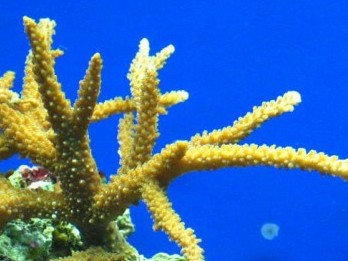
Acropora sp
Featured guide
This will pull the most popular / featured article tagged to this species.
Water parameters
Water parameters are being added.
About 300 Acropora
General information
In general, species from Acropora may grow either as a plate, slender or broad branching type of reef-building corals. Each branch has several colonies that are composed of several corallites. When undisturbed, their polyps will extend. But it will retract and hide inside the pores as a response to water movement or threat by nearby predators. They are common in shallow reefs with good visibility and strong water movement. They are noted as a refuge for small fish.
For the 300 Acropora, they have a green branch and violet corallite and polyps. This is the water parameters for cultivating 300 Acropora:
- Calcium: 400 – 450 ppm
- Alkalinity: 3.2 – 4.5 MEQ/L
- Phosphates: 0
- Magnesium: 1350 – 1500
- Strontium: 10
- Temperature: 72° – 78° F (22° – 26° C)
- Salinity / Specific Gravity: 1.024 – 1.025
Diet & nutrition
Feeding the 300 Acropora in captivity with nano-zooplankton once a week is recommended. Do not feed them with copepods, artemia, and other nauplii as they too large for them to ingest. The addition of dissolved organics is also recommended.
Determining sex
A mature tank is highly recommended in propagating 300 Acropora. They require a stable tank condition and that a sudden change could lead to stress and death. They are highly sensitive to temperature, sedimentation, chemical, and environmental change.
Breeding & spawning
300 Acropora require moderate to intense lighting and strong water flow. They are known to stress out in a low light environment and slow water flow.
Origination
Being both a tropical and subtropical species, 300 Acropora are found in the entire Indo-Pacific region particularly in Fiji, Sulu Sea, Madagascar, Phoenix Island, Marshall Islands, and Australia.
Cautions
You have to watch out for crabs. Except for the commensal crabs, most decapods and other crustaceans do not do well with 300 Acropora. Avoid moving them from place to place as this can cause stress and death.
300 Acropora do not have stinging tentacles. But they have digestive strands like Acontia and Terpins that could be released if they are set to nearby corals. They are specifically aggressive to zoanthids and soft leather corals.
Acclimation process
300 Acropora should be carefully acclimated. They should be placed in their permanent position immediately after acclimation. It takes 6 months for them to regain normal growth. They are purely marine, therefore, salinity must be maintained thoroughly at 1.023 to 1.025 specific gravity.
Related articles
These will pull posts tagged to this species (not tied to the species record).
All photos
Tap a photo to open the gallery viewer.