
Pink Sea Squirt
Ascidia mentula
Saltwater Invertebrate
Species Group: Sea Squirt
Family: Ascidiiae
Log in or create an account to add this species to your tanks.
Water parameters
Temp
76-80 F
Temperature
Maintaining a stable and appropriate temperature is critical for the survival of aquatic life.
pH 7.8 - 8.4 potential of HydrogenMeasuring the acidity or alkalinity of water on a 0–14 scale, where 7 is neutral, 7 is alkaline.
NO3 1-20 ppm NitrateWhile less toxic than ammonia, high nitrate levels (above 40–80 ppm) are important to monitor because they can cause fish stress, stunted growth, and harmful algae blooms.
NO2 <0.0001 ppm NitriteIt is a highly toxic, intermediate compound in the nitrogen cycle produced from broken-down ammonia
PO4 0.01 - 0.1 ppm PhosphateIt is essential for plant development but must be managed, as excess levels trigger nuisance algae blooms and inhibit coral calcification.
NH3 <0.1 ppm AmmoniaIt is the primary killer of aquarium fish, causing gill damage, stress, and death
Ca 380 - 450 ppm CalciumSupporting the growth, skeletal structure, and shell formation of corals, mollusks, crustaceans, and coralline algae
KH 8 - 12 dKH AlkalinityIt acts as a shield, neutralizing acids to prevent dangerous pH "crashes" that can harm fish, corals, and plants.
Mg 1200 - 1400 ppm MagnesiumIt enables coral growth by supporting skeletal formation, assists in metabolic processes, and ensures that calcium is available for corals, clams, and coralline algae.
SG 1.023 - 1.026 SG SalinityEssential for maintaining stable, natural water parameters, proper osmoregulation, and stress-free environments for marine fish and corals
ORP 250 - 400 mV Oxidation-Reduction PotentialA higher positive mV indicates clean, oxygen-rich water with high water quality, while low readings indicate high pollution.
About Pink Sea Squirt
General information
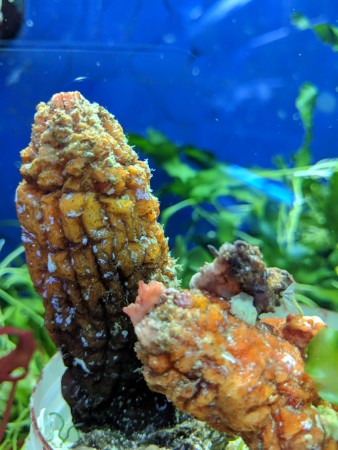
The Pink Sea Squirt size will typically range between 5 to 18 cm but occasionally have been seen to reach to 30 cm. Found in different shades of pink. The body is ovoid and is attached to the substratum by the left side. Has an oral siphon and an atrial siphon half the length of the body used to eliminate waste products — the pink sea-squirt lives attached to rocks, wrecks or shells. This species has a rather long lifespan, some of them living up to 7 years old. The Pink Sea Squirt is found in deeps between 5 meters to depths of 200 meters deep. Sea squirts often form colonies that look like grapes or rubbery blobs on the seafloor.
Sea squirt ejects water from the siphon as a response to touch or when pulled out of the water and that is how they got their name “sea squirt”.
Diet & nutrition
The sea squirt is a filter feeder. It absorbs water with edible particles through the siphon and separates plankton and algae from the water in the pharynx and lower parts of the digestive system.
Breeding & spawning
Sea squirts will reach sexual maturity within a few weeks - they have both types of reproductive organs. They release eggs and sperm cells directly into the water, where they mix and merge with sperm cells and eggs of other sea squirts (self-fertilization happens rarely).
Fertilized eggs float as a part of zooplankton from 12 hours to three days. Larvae have numerous anatomical features of vertebrates, and they look like tadpoles. Shortly after hatching, larvae migrate to the ocean floor to find a suitable spot where they will spend the rest of their life, attached to the substrate.
Origination
Found in the Atlantic Ocean from Norway to the Mediterranean Sea, in the North Sea and the English Channel.
Cautions
Natural enemies of sea squirts are eels, large fish, snails, starfish, and crustaceans
All photos
Tap a photo to open the gallery viewer.