
Porcelain Anemone Crab
Neopetrolisthes ohshimai
Saltwater Invertebrate
Species Group: Crab
Family: Porcellanidae
Log in or create an account to add this species to your tanks.
Water parameters
Temp
76-80 F
Temperature
Maintaining a stable and appropriate temperature is critical for the survival of aquatic life.
pH 7.8 - 8.4 potential of HydrogenMeasuring the acidity or alkalinity of water on a 0–14 scale, where 7 is neutral, 7 is alkaline.
NO3 1-20 ppm NitrateWhile less toxic than ammonia, high nitrate levels (above 40–80 ppm) are important to monitor because they can cause fish stress, stunted growth, and harmful algae blooms.
NO2 <0.0001 ppm NitriteIt is a highly toxic, intermediate compound in the nitrogen cycle produced from broken-down ammonia
PO4 0.01 - 0.1 ppm PhosphateIt is essential for plant development but must be managed, as excess levels trigger nuisance algae blooms and inhibit coral calcification.
NH3 <0.1 ppm AmmoniaIt is the primary killer of aquarium fish, causing gill damage, stress, and death
Ca 380 - 450 ppm CalciumSupporting the growth, skeletal structure, and shell formation of corals, mollusks, crustaceans, and coralline algae
KH 8 - 12 dKH AlkalinityIt acts as a shield, neutralizing acids to prevent dangerous pH "crashes" that can harm fish, corals, and plants.
Mg 1200 - 1400 ppm MagnesiumIt enables coral growth by supporting skeletal formation, assists in metabolic processes, and ensures that calcium is available for corals, clams, and coralline algae.
SG 1.023 - 1.026 SG SalinityEssential for maintaining stable, natural water parameters, proper osmoregulation, and stress-free environments for marine fish and corals
ORP 250 - 400 mV Oxidation-Reduction PotentialA higher positive mV indicates clean, oxygen-rich water with high water quality, while low readings indicate high pollution.
About Porcelain Anemone Crab
General information
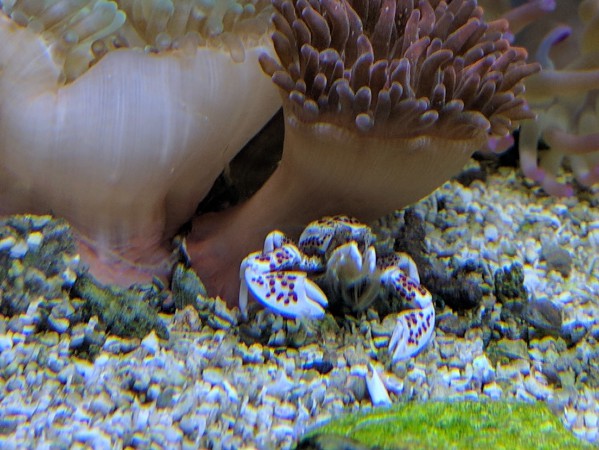
The Porcelain Crab is common throughout the tropical oceans of the world, and has a flat, round body with two large front claws. They are brown and orange in coloration with bright blue spots. These crabs have a pair of front arms called maxillipeds, which have ends that are feather-like in appearance. They use these appendages to filter the water for any passing food. They are peaceful and interesting invertebrates for the marine aquarium. Porcelain Crabs live together in pairs typically found within or under rocks in nature. The ideal aquarium will contain plenty of live rock for both hiding and feeding, and will not contain any fish or invertebrates that may bring harm to these peaceful invertebrates. They are reef safe, and will not harm other invertebrates or corals.
Diet & nutrition
Porcelain anemone crabs are omnivorous species that feed off by filtering feeders and planktons out of water. They also eat mucus excreted by anemones which provides a natural diet, and clean up debris from within its tentacles.
Determining sex
Determining the sex of porcelain anemone crabs can be done by examining their underside thoroughly. Male crabs have triangular shaped plates in its shell, while female crabs have rounded plates.
Breeding & spawning
These species breeds as most crustaceans do. The eggs of the female crabs are fertilized by the male ones by secreting their sperms. These fertilized eggs are then carried under the body of female crabs. By the time these eggs hatch, the larvae will go through a planktonic stage before they grow into their adult forms.
Origination
These species originated in Indo-West Pacific Ocean: Maldives to Australia.
Cautions
Porcelain anemone crabs inhabit coastal reefs or fish-only aquarium. Corals may be added to their environment in an aquarium, and they are safe to be mixed with other invertebrates as seen living with large host anemones. But, it should not be together with larger crabs because it won't be able to defend its turf.
Acclimation process
When taking the invertebrate out, expose it to as little light as possible and turn the aquarium lights off. Place the invertebrate container bag in the aquarium and let it float for 15 minutes. Open the bag and pour in 1 ounce of aquarium water into it, do so every 5 minutes until the water inside the bag has doubled. Wait for 5 minutes before pouring off half the water inside the bag into the aquarium. Then, slowly place each animal in the aquarium. Turn the aquarium lights on after an hour or more.
All photos
Tap a photo to open the gallery viewer.