
Dwarf Zebra Hermit Crab
Calcinus laevimanus
Saltwater Invertebrate
Species Group: Crab
Family: Diogenidae
Log in or create an account to add this species to your tanks.
Water parameters
Temp
76-80 F
Temperature
Maintaining a stable and appropriate temperature is critical for the survival of aquatic life.
pH 7.8 - 8.4 potential of HydrogenMeasuring the acidity or alkalinity of water on a 0–14 scale, where 7 is neutral, 7 is alkaline.
NO3 1-20 ppm NitrateWhile less toxic than ammonia, high nitrate levels (above 40–80 ppm) are important to monitor because they can cause fish stress, stunted growth, and harmful algae blooms.
NO2 <0.0001 ppm NitriteIt is a highly toxic, intermediate compound in the nitrogen cycle produced from broken-down ammonia
PO4 0.01 - 0.1 ppm PhosphateIt is essential for plant development but must be managed, as excess levels trigger nuisance algae blooms and inhibit coral calcification.
NH3 <0.1 ppm AmmoniaIt is the primary killer of aquarium fish, causing gill damage, stress, and death
Ca 380 - 450 ppm CalciumSupporting the growth, skeletal structure, and shell formation of corals, mollusks, crustaceans, and coralline algae
KH 8 - 12 dKH AlkalinityIt acts as a shield, neutralizing acids to prevent dangerous pH "crashes" that can harm fish, corals, and plants.
Mg 1200 - 1400 ppm MagnesiumIt enables coral growth by supporting skeletal formation, assists in metabolic processes, and ensures that calcium is available for corals, clams, and coralline algae.
SG 1.023 - 1.026 SG SalinityEssential for maintaining stable, natural water parameters, proper osmoregulation, and stress-free environments for marine fish and corals
ORP 250 - 400 mV Oxidation-Reduction PotentialA higher positive mV indicates clean, oxygen-rich water with high water quality, while low readings indicate high pollution.
About Dwarf Zebra Hermit Crab
General information
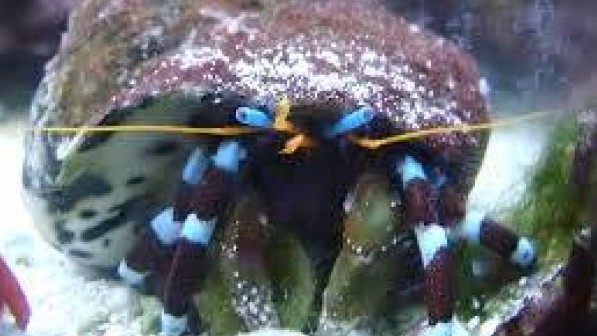
The Dwarf Zebra Hermit Crab is popular because of its unique coloration. Its pincers are dark but it has white or orange stripes making it look like zebra’s skin. It also has long eyestalks that are colored blue with an orange upper half part. Its body is small but its left claw is enlarged, therefore, it is also called Left-Handed Hermit Crab. Like other hermit crabs, it also lives inside empty snail shells that serve as its protective covering. It can grow up to 1 in.
Diet & nutrition
It is an herbivore and a scavenger that mainly subsists on algae and cyanobacteria. In instances of food scarcity, dried seaweed may be used to feed it.
Determining sex
There are no definite characteristics that can differentiate the two sexes.
Breeding & spawning
Breeding hermit crabs in the aquarium is difficult.
Origination
It is native to the Caribbean.
Cautions
Like most invertebrates, the Dwarf Zebra Hermit Crab does not do well if there are large swings in water parameters. It also does not tolerate any type of metal traces in the water, therefore, it should never be in contact with any copper medications.
Acclimation process
Most invertebrates do not like large swings in water parameters and the Dwarf Zebra Hermit Crab is not an exception, so even though most hobbyists do not acclimate their cleaner crews it is suggested to do so. If you have a sump, float your cleaner crew in an area with low light to allow them to temperature acclimate first which should take about 15-20 min. Then it is best to slowly drip acclimate them to allow them to adjust to your water conditions.
All photos
Tap a photo to open the gallery viewer.