White Ghost Lobster
Procambarus clarkii
Featured guide
This will pull the most popular / featured article tagged to this species.
Water parameters
Water parameters are being added.
About White Ghost Lobster
General information
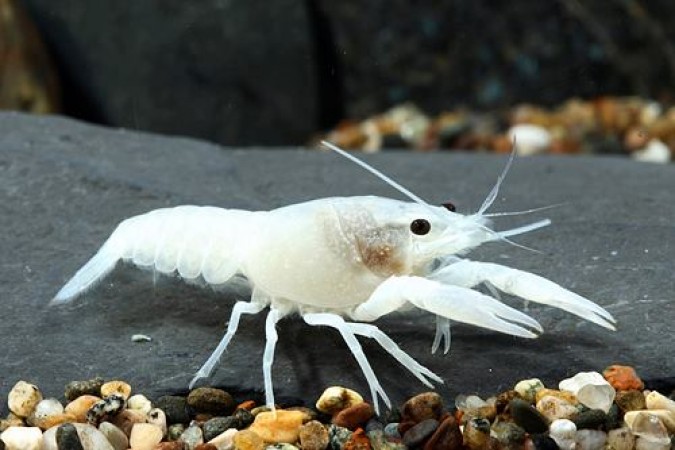
The White Ghost Lobster is from the rivers and streams of North East Australia and is one of the larger species of crayfish attaining a total length of up to 12 inches. They are a brilliant white color with relatively small claws for their size. They are well known for keeping tanks clean and free of waste.
It is important to provide a freshwater aquarium of at least 50 gallons with plenty of rocks, and a substrate with a moderate grain size or finer for the White Ghost Lobster to burrow in. They are semi-aggressive towards their own kind so require room for territories, and a larger aquarium will be needed if housing more than one. When housing more than one, provide at least 40 gallons per Lobster and include plenty of cover including both rocks and plants. Another thing they need is a tank full of large gravel and pebbles so that they can occupy their time moving around to form their home. Sometimes hobbyist goes to the extent of creating artificial hiding place using cut out pipes, coconut shells or even aquarium caves which you can buy from pet stores. If you intend to grow live plants in the tank, make sure that you choose to use those hardy large leaves type or else your crayfish will tear them apart easily. Finally, your pet crayfish will breed naturally if all conditions such as clean water source with rich diet are available and as such, I would recommend getting a filter even though the water will not get dirty easily.
Crayfish are normally added to the tank when they are small but once they reach a certain maturity size, they are best taken out and put in a solitary confinement with one crayfish per tank or in groups with only your pet being the single species. Crayfish are notorious for fighting with each other, sometimes up to the extent of losing their claws and if you put crayfish of different sizes, usually the smaller ones get bullied and become malnourished and stay that way the same with that size. They will not typically bother fish unless they are very small, and slow enough for the lobster to catch. This species wouldn’t be suitable for community tanks full of small fishes such as guppy, neon tetra or danio, especially for beginners.
Diet & nutrition
These Lobsters are omnivorous, and will act as a scavenger in the aquarium, eating any food that comes to rest on the bottom. They feed on almost everything from vegetable leaves, for example, spinach, carrots, algae wafers and if you want to supplement the diet with meaty foods for faster growth, you can also use fresh market shrimps and fish fillets. Quality sinking pellet, flake food and dried algae are also suitable for their diet.
Determining sex
It is very difficult to differentiate between the sexes of these crayfish.
Breeding & spawning
They are relatively easy to breed in captivity, and the eggs hatch in about 21 days. After hatching, the fry can be fed flake or pellet foods and should be separated in order to keep them from eating each other.
Cautions
Avoid any food product, medication, or plant fertilizer that contains Copper of any form. Copper is toxic to invertebrates. Many commercial fish foods, medications, and plant fertilizers contain copper or more commonly copper sulfate. Always look at the ingredient list for any product going into the aquarium to ensure they are copper free.
Related articles
These will pull posts tagged to this species (not tied to the species record).
All photos
Tap a photo to open the gallery viewer.