Blue Knight Lobster
Cherax destructor
Featured guide
This will pull the most popular / featured article tagged to this species.
Water parameters
Water parameters are being added.
About Blue Knight Lobster
General information
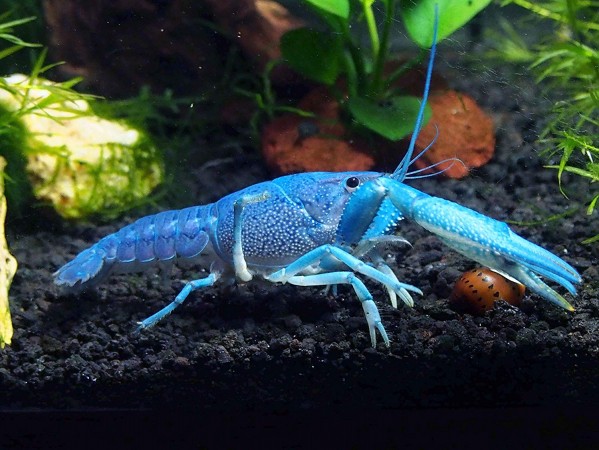
Blue Knight Lobster is one of the larger species of crayfish attaining a total length of up to 12 inches. The length of blue lobster often ranges between 4 to 8 inches but occasionally will grow to 12 inches. Their colors can vary from a brilliant blue to a bluish brown coloration, and they have relatively small claws for their size. Color may vary depending on location, season and water conditions and there may be variation among individuals within a single location. They will rarely hunt for fish as they are generally too slow to catch the latter.
It is important to provide a freshwater aquarium of at least 50 gallons with plenty of rocks, and a substrate with a moderate grain size or finer for the Blue Knight Lobster to burrow in. They can be aggressive towards their own kind, and require plenty of room for territories, and a larger aquarium will be needed if housing more than one. When housing more than one, provide at least 40 gallons per Lobster and include plenty of cover including both rocks and plants.
This lobster is known to have a high tolerance for a variety of environments. They are generally found where there are high oxygen levels and a good source of vegetation in nature. Their ideal temperature range in 68-85°F, but they are able to survive in 33-95°F while growth stops below 60°F and above 95°F. High salinity levels are tolerated by them, but only for a period of time. They can survive in seawater for up to 48 hours, but after this stress on their systems, they stop growing. They can tolerate low oxygen levels, but after long periods of time, their growth will stop. Optimal pH level is between 6.5-8.0 and dkH is between 3-10.
Diet & nutrition
Blue Knight Lobster is known to be an omnivorous species that feed on plants, detritus, and some arthropods. They may have cannibalistic tendencies in areas where there is an overabundance of the species and low levels of natural food sources. They have shown antagonistic behavior to get access to limited resources. They act as a scavenger in the aquarium, eating any food that comes to rest on the bottom. Supplementing their diet with a quality sinking pellet, flake food, and dried algae are beneficial for them.
Determining sex
It is very difficult to differentiate between the sexes of these. However females will experience a reduced growth rate after maturity is reached likely in response to the energy requirements of spawning; for this reason, females are often smaller than males.
Breeding & spawning
They are relatively easy to breed in captivity, and the eggs hatch in about 21 days. After hatching, the fry can be fed flake or pellet foods and should be separated in order to keep them from eating each other.
Origination
The Blue Knight Lobster is from the rivers and streams of New Guinea and Australia.
Related articles
These will pull posts tagged to this species (not tied to the species record).
All photos
Tap a photo to open the gallery viewer.