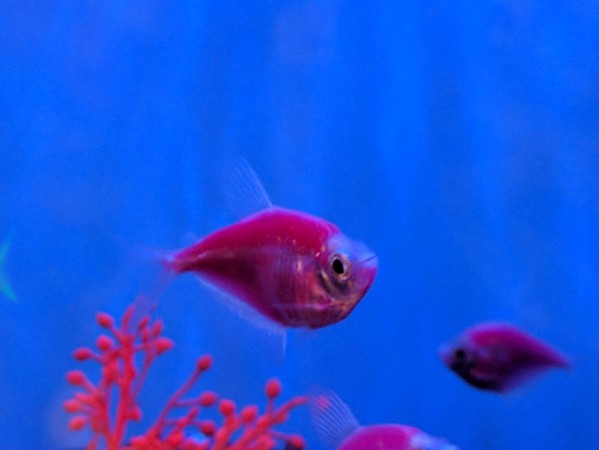
Starfire Red Tetra Glofish
Gymnocorymbus ternetzi
Featured guide
This will pull the most popular / featured article tagged to this species.
Water parameters
Water parameters are being added.
About Starfire Red Tetra Glofish
General information
Tetras have a small rounded fin between the dorsal fin and the tail fin and many bones connecting the inner ear to the swim bladder providing an excellent hearing to these fish. Starfire Red Tetras are genetically modified to be fluorescent red. These fish are usually 2.4 inches. To keep these fish in captivity water pH should be between 6.0 and 7.0 and water temperature should range from 68ºF to 78ºF. The tank should have dense vegetation, open areas for swimming, a cover since these fish are jumpers, floating vegetation to help dim the light and gravel or sand substrate. These fish can be kept in a community aquarium with larger fish, smaller fish may get their fins nipped by the tetra however the fin-nipping behavior of the tetra can be corrected by keeping it in a group of at least 6. A 15 gallon, 20 inches long tank is the minimum recommended for a small group.
Diet & nutrition
This species is omnivorous. In the wild it feeds on worms, crustaceans and insects. In captivity it’s diet should include dried foods and live or frozen foods like bloodworm or Daphnia.
Determining sex
Mature females are rounder and larger than males while males have more pointed dorsal and anal fins than females. Also the female’s “skirt” runs parallel to the stomach line while the male’s is broader.
Breeding & spawning
To breed these fish in captivity, water temperature should range from 82ºF to 86ºF and the tank should be dimly lit ( the eggs and fry are light sensitive) and have fine-leaved plants. The tank should have a group of 12, 6 of each sex and these should be fed with live or frozen foods. The adults should be removed from the tank once the eggs are deposited to prevent them from eating the eggs. The eggs take 18 to 36 hours to hatch and the fry become free swimming a few days after hatching. In the first few days the fry should be fed with infusoria type food and once they are large enough they can be fed with microworm or brine shrimp.
Origination
This species can be found in the Paraguay and Guapore basins in Brazil, Bolivia and Argentina. It inhabits small, lentic creeks, tributaries and streams that have dense vegetation.
Related articles
These will pull posts tagged to this species (not tied to the species record).
All photos
Tap a photo to open the gallery viewer.