Spotted Angelfish Freshwater
Pterophyllum leopoldi
Featured guide
This will pull the most popular / featured article tagged to this species.
Water parameters
Water parameters are being added.
About Spotted Angelfish Freshwater
General information
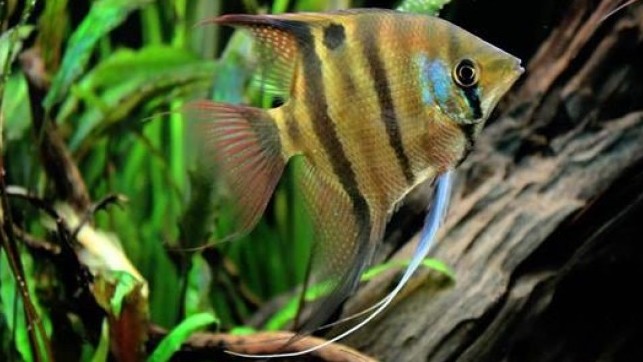
The Spotted Angelfish (Pterophyllum scalare) is a popular fish among aquarists due to its unique coloration, which consists of a light tan background with dark spots and stripes. It is a relatively small fish, reaching a maximum size of about 6 inches. The Spotted Angelfish is an active fish that prefers to be kept in groups of at least four, and is generally peaceful towards its tankmates. It is an omnivore, feeding mostly on small insects, worms, and plant matter in the wild. It is important to provide a varied diet in captivity, as well as water parameters that match its natural environment.
The Spotted Angelfish prefers to be kept in a tank with soft to medium-hard water with a pH of 6.5-7.5. Water temperature should be kept between 74-82F, and good filtration is necessary as the species is sensitive to poor water quality. A tank of at least 20 gallons is recommended for two angelfish, with larger tanks allowing for more fish. The tank should also have plenty of hiding places, such as rocks and driftwood, as the species can be shy. Substrate should be either sand or gravel, as the species enjoys sifting through the substrate in search of food.
Diet & nutrition
The Spotted Angelfish is an omnivore, feeding mostly on small insects, worms, and plant matter in the wild. In captivity, it should be fed a variety of foods such as flake, freeze-dried, and live food. Vegetables should also be fed, such as spinach, zucchini, and blanched peas. It is important to provide a varied diet to ensure that the fish is getting all the nutrients it needs. Additionally, supplements such as vitamins and minerals can be added to the diet to ensure the fish is getting everything it needs.
Origination
The Spotted Angelfish (Pterophyllum scalare) is a freshwater species native to the Amazon basin in South America.
Acclimation process
Acclimating the Spotted Angelfish to a new aquarium is an important step in ensuring the health and happiness of the fish. The process should start with floating the bag of fish in the aquarium for about 15 minutes, then slowly adding small amounts of aquarium water to the bag to allow the fish to adjust to the new water parameters. Once the bag is full, the fish can be released into the aquarium. It is important to monitor the water quality during the acclimation process to ensure it is not dropping too quickly. After the fish are acclimated, regular water changes should be done to maintain a healthy environment for the fish.
Related articles
These will pull posts tagged to this species (not tied to the species record).
All photos
Tap a photo to open the gallery viewer.