Retropinnis Bichir
Polypterus retropinnis
Featured guide
This will pull the most popular / featured article tagged to this species.
Water parameters
Water parameters are being added.
About Retropinnis Bichir
General information
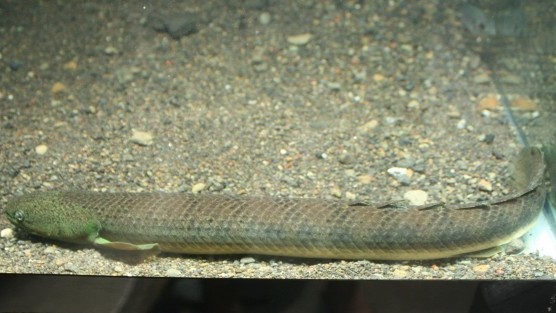
Known to tropical fish keeping enthusiasts as the West African Bichir or Speckled Bichir it is a relatively small Bichir, that grows considerably slower than other species. Small though it may be, this species is territorial and should be kept with other fish of the same size. The average adult size is 35 cm (14 inches), and it can live up to 10 years. Speckled Bichirs have a snakelike body with an obtuse, pointy head. They are largely nocturnal and have poor vision, which lends itself to an excellent sense of smell. They are a yellowish brown color, covered with dark patches over most of their body.
In the wild, Retropinnis Bichirs frequent swamps, marshes, flooded forests, and smaller rivers. Like other members of the Polypteridae family, they can survive out of water for short periods as long as they are kept moist. They possess both paired modified swim bladders that function as “lungs”, as well as gills for breathing. These fish can drown if denied access to atmospheric oxygen. This is evidence of their link between fish and amphibians.
This is an incredibly hardy species, and along with others of its genus are some of the last surviving relatives of a very ancient species. Fossils of earlier relatives date back to the Triassic Period, more than 200 million years ago, during the early development of dinosaurs.
Diet & nutrition
Retropinnis Bichirs emerge from their daytime retreats to hunt invertebrates and small fish in shallow water. This is evidence of their link between fish and amphibians. They are carnivorous by nature and will not usually accept dried foods in an aquarium environment. They are fond of live or frozen shrimp, prawns, mussels, earthworms, chopped meat or small fish. They are largely nocturnal and have poor vision, which lends itself to an excellent sense of smell. It is best to feed them during the evening just before turning off the lights on your aquarium.
Determining sex
Males are distinguished by the thicker anal fin that is about twice as wide as, and more muscular than, the females.
Breeding & spawning
There is no recorded breeding of this species in captivity, though it is thought to reproduce in a way similar to other Polypterus species. In nature, they reproduce during the rainy season. Changes in temperature and slightly acidic water likely induce courtship and mating. Courtship involves the male chasing and nudging the female. During spawning, the male collects the eggs from the female by cupping his anal and caudal fins around her genitals. Then he then fertilizes the eggs before scattering them amongst vegetation. Areas of dense vegetation or spawning mops should be provided for this reason. After spawning, adult fish should be removed as they may eat the eggs. The eggs will hatch in 3-4 days. The juveniles will become free swimming approximately three days later. First foods should be micro worms or newly hatched baby brine shrimp. Since the juveniles are not particularly mobile, use an eye dropper to ensure they are well fed.
Diseases
Consider that most Polypterus sold commercially are wild caught and may be carrying infections or parasites.
Origination
Native to tropical West Africa
Related articles
These will pull posts tagged to this species (not tied to the species record).
All photos
Tap a photo to open the gallery viewer.