Red Grass Guppy
Poecilia reticulata
Featured guide
This will pull the most popular / featured article tagged to this species.
Water parameters
Water parameters are being added.
About Red Grass Guppy
General information
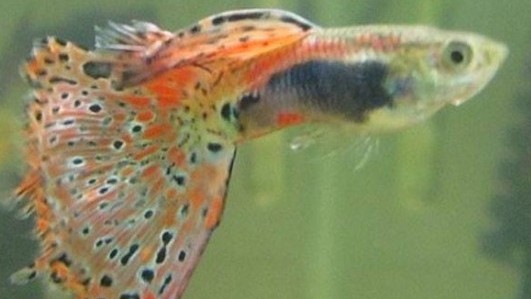
The Red Grass Guppy has a slender, elongated body shape with a pointed tail fin. They have vibrant red and orange colors on their body, with a green iridescence and a distinctive grass-like pattern on their fins. Males are generally more colorful than females and have a gonopodium, which is a modified anal fin used for reproduction.
Red Grass Guppies are a peaceful and active fish that are commonly kept in home aquariums. They are known for their ability to adapt to a wide range of water conditions and are suitable for both beginners and experienced aquarists. They are omnivorous and will feed on a variety of foods, including flakes, pellets, and live or frozen foods.
Red Grass Guppies are native to the streams and rivers of South America, but are now widely distributed across the world due to their popularity in the aquarium trade. In the wild, they inhabit areas with slow-moving or still water and plenty of vegetation.
The Red Grass Guppy is not currently listed as a threatened species, and its population is considered stable in the wild. However, the aquarium trade has led to the selective breeding of guppies with specific color patterns, which can result in inbreeding and loss of genetic diversity. As a result, it is important for breeders to maintain a diverse gene pool and avoid the overuse of specific breeding lines.
Breeding & spawning
Red Grass Guppies are livebearers, which means that they give birth to live young instead of laying eggs. Breeding is relatively easy, and females can produce a new brood every four to six weeks. Females can store sperm from a single mating and give birth to several broods of offspring that have different fathers.
Breeding & spawning
Red Grass Guppies are livebearers, which means that they give birth to live young instead of laying eggs. Breeding is relatively easy, and females can produce a new brood every four to six weeks. Females can store sperm from a single mating and give birth to several broods of offspring that have different fathers.
Related articles
These will pull posts tagged to this species (not tied to the species record).
All photos
Tap a photo to open the gallery viewer.