Platinum Grass Guppy
Poecilia reticulata
Featured guide
This will pull the most popular / featured article tagged to this species.
Water parameters
Water parameters are being added.
About Platinum Grass Guppy
General information
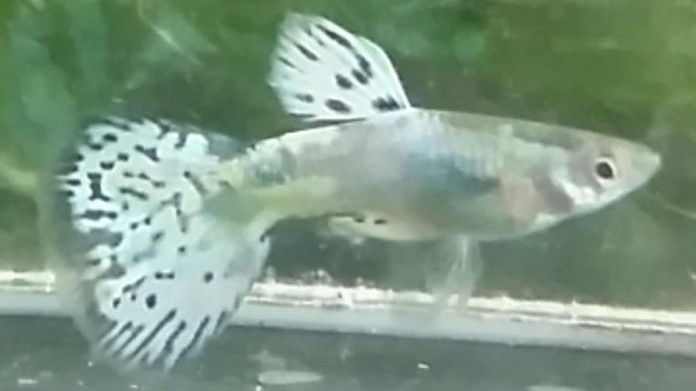
The Platinum Grass Guppy is a peaceful, easy-to-care-for freshwater fish that is ideal for beginners. It is a colorful and active fish that adds beauty and excitement to any aquarium. These guppies are popular due to their metallic silver body and grass-green dorsal fin, which provides a unique contrast. They are a small species of fish, typically growing up to 1.5 inches in length.
Diet & nutrition
Platinum Grass Guppies are omnivores and have a varied diet. They enjoy eating flake food, freeze-dried or frozen brine shrimp, bloodworms, and other small live or frozen foods. It is best to feed them small amounts of food several times a day rather than one large feeding.
Determining sex
Male Platinum Grass Guppies have a longer and more colorful tail fin, also known as a caudal fin. They also have a gonopodium, which is a modified anal fin used for reproduction. Females are generally larger, with a rounder belly and a shorter tail fin.
Breeding & spawning
Platinum Grass Guppies are livebearers, which means they give birth to live young instead of laying eggs. Breeding is easy and can happen quickly if you keep males and females together. It is recommended to keep one male for every two females to avoid overbreeding. Females can give birth to up to 50 fry per litter.
Diseases
Platinum Grass Guppies are generally healthy fish and are not prone to any specific diseases. However, they are susceptible to common freshwater fish diseases such as ich, fin rot, and velvet. It is essential to maintain good water quality and monitor their behavior to ensure their health.
Origination
The Platinum Grass Guppy is a selectively bred variant of the Poecilia reticulata species, which is native to northeastern South America.
Cautions
Platinum Grass Guppies are generally peaceful fish and can be kept with other peaceful fish in a community tank. However, it is best to avoid keeping them with aggressive or fin-nipping fish, as they may nip at their long fins.
Acclimation process
It is essential to acclimate the Platinum Grass Guppy to its new environment slowly. Float the bag containing the fish in the aquarium for 15-20 minutes to equalize the temperature. Then, gradually add some of the aquarium water to the bag every 5-10 minutes until the bag is full. Afterward, release the fish into the aquarium.
Related articles
These will pull posts tagged to this species (not tied to the species record).
All photos
Tap a photo to open the gallery viewer.