Masked Julie Cichlid
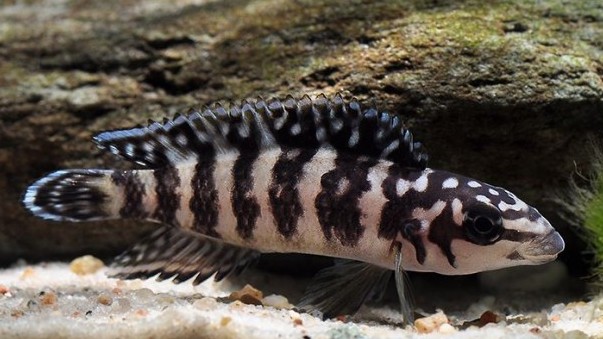
Julidochromis transcriptus
Featured guide
This will pull the most popular / featured article tagged to this species.
Water parameters
Water parameters are being added.
About Masked Julie Cichlid
General information
The Masked Julie Cichlid is a small, freshwater fish that is native to the rocky shoreline areas of Lake Tanganyika in East Africa. It has an elongated body shape with distinctive vertical stripes on a silver or gold background. It is a peaceful and relatively hardy fish that can live up to 8 years with proper care.
Diet & nutrition
In the wild, the Masked Julie Cichlid feeds on small invertebrates and plankton. In captivity, it can be fed a variety of foods including high-quality flakes, pellets, frozen and live foods such as brine shrimp, bloodworms, and daphnia. A balanced diet is important for optimal health and coloration.
Determining sex
Males are typically larger and more colorful than females. During breeding season, males will become more aggressive and develop elongated fins.
Breeding & spawning
Masked Julie Cichlids are cave spawners and will often lay their eggs in crevices or cracks in rocks. They are relatively easy to breed in captivity and will lay around 100 eggs per spawn. The female will guard the eggs while the male will guard the territory.
Diseases
Masked Julie Cichlids are generally hardy fish but are susceptible to common freshwater diseases such as Ich and fin rot. A healthy diet and clean water conditions can help prevent illness.
Origination
The Masked Julie Cichlid is native to Lake Tanganyika in East Africa.
Cautions
Masked Julie Cichlids are generally peaceful but can become aggressive during breeding season. It is important to provide adequate hiding places to reduce aggression.
Acclimation process
It is important to properly acclimate Masked Julie Cichlids to their new environment to reduce stress and increase their chances of survival. This can be done by slowly introducing them to the new water conditions over a period of several hours.
Related articles
These will pull posts tagged to this species (not tied to the species record).
All photos
Tap a photo to open the gallery viewer.