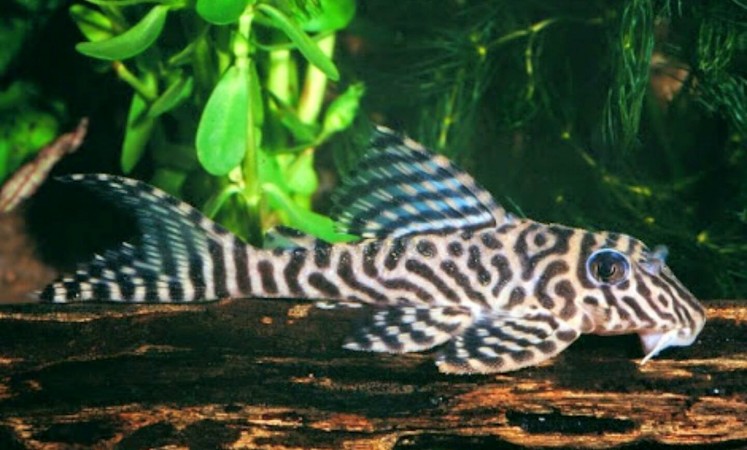
Gypsy King Tiger Pleco L66
Hypancistrus sp
Featured guide
This will pull the most popular / featured article tagged to this species.
Water parameters
Water parameters are being added.
About Gypsy King Tiger Pleco L66
General information
The Gypsy King Pleco (Hypancistrus sp.) is a freshwater species that belongs to the Loricariidae family. They are native to South America and are found in rivers and streams with moderate to fast currents. The Gypsy King Pleco has a maximum length of about 6 inches (15 cm) and is known for its striking appearance with a dark body covered in white or yellow stripes. They are relatively rare and prized in the aquarium trade.
Diet & nutrition
Gypsy King Plecos are primarily herbivorous and require a varied diet. Their diet should consist of vegetables, such as zucchini, cucumbers, and algae wafers. They also require wood in their diet to aid in digestion, so a piece of driftwood should be included in their aquarium. They will also eat meaty foods, such as bloodworms and brine shrimp.
Determining sex
It is challenging to determine the sex of Gypsy King Plecos until they reach sexual maturity. Males may have a broader head and more pronounced odontodes (bony protrusions) on their pectoral fins, whereas females may have a rounder abdomen.
Breeding & spawning
Gypsy King Plecos are challenging to breed in captivity, and there is limited information on their breeding habits. They are believed to be egg layers, and the male may guard the eggs until they hatch. The fry should be fed a diet of infusoria and newly hatched brine shrimp.
Diseases
Gypsy King Plecos are relatively hardy and are not prone to many diseases if their water conditions are well maintained. However, they can be susceptible to common freshwater fish diseases, such as ich and fin rot.
Origination
Gypsy King Plecos are native to South America, specifically the Rio Xingu in Brazil.
Cautions
Gypsy King Plecos are generally peaceful and can be kept with other non-aggressive fish. However, they can become territorial during breeding season and may need to be separated from other fish during this time. Additionally, they require a well-maintained aquarium with good water quality to thrive.
Acclimation process
When introducing Gypsy King Plecos to a new aquarium, it's essential to acclimate them slowly to avoid stress and shock. Float the bag containing the fish in the aquarium for about 20 minutes to equalize the temperature, then slowly add small amounts of aquarium water to the bag every 10-15 minutes for at least an hour.
Related articles
These will pull posts tagged to this species (not tied to the species record).
All photos
Tap a photo to open the gallery viewer.