Gold Ocellatus Cichlid
Lamprologus ocellatus
Featured guide
This will pull the most popular / featured article tagged to this species.
Water parameters
Water parameters are being added.
About Gold Ocellatus Cichlid
General information
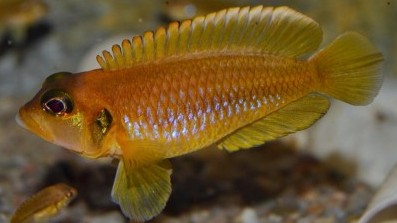
These fish have a gray body with blue on its sides, and its dorsal fins are lined with white and/or orange, it has bulging eyes, a sloped forehead and males reach 2.4 inches while females reach 1.4 inches. To keep this species in captivity, water pH should be between 8.0 to 9.0, and water temperature should be between 73ºF and 81ºF. The tank should have a deep sandy substrate and plenty of empty snail shells, and there should be more shells than individuals. They are peaceful but extremely territorial and will even attack the owner if the owner gets close to their shell. Lamprologus ocellatus can be kept in a community tank as long as its tankmates inhabit other areas of the aquarium, for example, rock dwellers. These species should be kept in groups of at least 5.
Diet & nutrition
This species is omnivorous. It can be fed with dried, live or frozen foods.
Determining sex
Males are larger and have a gold lining on their dorsal and anal fins while females are smaller and have a white lining on their dorsal and anal fins.
Breeding & spawning
During breeding females get darker in their backs. Females try to catch the male’s attention by displaying at the entrance of their shells. When a male is interested, the female will deposit her eggs on the shell and leave. The male releases his sperm which gets sucked into the shell by the action of the existing female. After fertilization, the male leaves and is no longer welcome in the female’s territory. The eggs hatch in 3 days, the fry become free-swimming in 10 days and can be fed with brine shrimp or microworms. To breed this species in captivity, water pH should be around 8.5 and temperature should be around 77ºF. It is best to keep several females per male. The same male may spawn with several females.
Origination
This species can be found in Lake Tanganyika, Africa. It inhabits open sand areas full of empty shells.
Related articles
These will pull posts tagged to this species (not tied to the species record).
All photos
Tap a photo to open the gallery viewer.