Emerald Green Cory Cat
Brochis splendens
Featured guide
This will pull the most popular / featured article tagged to this species.
Water parameters
Water parameters are being added.
About Emerald Green Cory Cat
General information
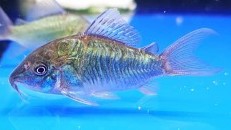
These fish are emerald green with pink or yellow markings on their lower body, their pectoral, ventral and anal fins are yellow and their dorsal, caudal and adipose fins are brown. They can reach 4 inches. They are facultative air breathers due to their highly vascularized intestine that allows them to breathe atmospheric air. To keep these fish in captivity, water pH should be between 5.8 and 8.0 and water temperature should be between 68ºF and 82ºF. The tank should have a sandy substrate, dense vegetation and hiding places. The Green Catfish is peaceful and can be kept in a community aquarium with equally peaceful tankmates. It should be kept in groups of at least 6, it should never be kept as a single fish because they get easily scared and shy. To keep such a group, a minimum 30 gallon tank is recommended.
Diet & nutrition
This species is omnivorous. In captivity, it can be fed with sinking dried foods and small live and frozen foods.
Determining sex
Mature females are rounder and larger than males. Females have pinkish undersides while males have yellow undersides.
Breeding & spawning
The male is the one to initiate courting by swimming all over the female. The female will release 12 eggs and bump the male’s ventral fin to make him release his sperm. The female then gathers the fertilized eggs and places them in a surface, like plants or rocks. The eggs hatch in 4 days and only gain the characteristic emerald color 6 to 7 weeks after spawining.
Origination
This species can be found in South America. It inhabits small streams and large rivers near the banks were there is less flow.
Cautions
Caution must be taken when purchasing this species because when imported from South America the individuals often carry diseases.
Coarse gravel should be avoided to prevent these fish’s bristles from getting damaged. Also, the substrate should be kept as clean as possible to prevent the bristles from getting infected.
Related articles
These will pull posts tagged to this species (not tied to the species record).
All photos
Tap a photo to open the gallery viewer.