Demasoni Cichlid
Pseudotropheus demasoni
Featured guide
This will pull the most popular / featured article tagged to this species.
Water parameters
Water parameters are being added.
About Demasoni Cichlid
General information
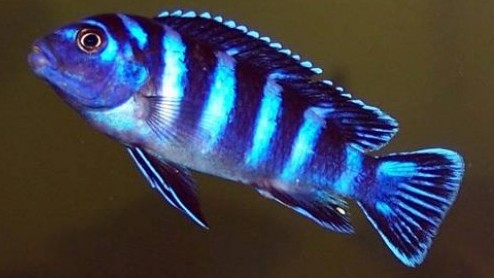
The average adult male is 3 inches and can live for about ten years with proper care. This species has dark vertical stripes alternated with lighter stripes. To keep these fish in captivity, the water should have a pH from 7.8 to 8.6 and water temperatures from 75ºF to 82ºF. The tank should have a network of caves, plenty of rocks, a lot of open swimming space and a sandy substrate. Pseudotropheys demasoni is highly aggressive, and it isn’t a community aquarium species. If housed in a community tank, its tankmates should be carefully chosen. Other aggressive Mbunas are acceptable for example. However, they can’t be the same color as P. demasoni, or they will be attacked. They are extremely aggressive between themselves as well and should be kept in groups of 12 or more, with only one male to 5-6 females, to help dissipate aggression. Overcrowded aquariums also help to dissipate aggression.
Diet & nutrition
This species is omnivorous, but its diet is primarily vegetarian. In the wild, it feeds on biofilm and sometimes eggs of other species. In captivity, it can be fed with spirulina flakes, blanched spinach, other vegetable matter, and Cichlid flakes.
Determining sex
Mature males are larger and more aggressive than females. Also, males have egg spots on the anal fin and females don’t.
Breeding & spawning
The female will spawn on a rock and then pick up the unfertilized eggs into her mouth, she will then follow the male due to the eggs spots on his anal fin which she thinks are more eggs to pick up, and the male will release the sperm and fertilize the eggs. The female will maintain the eggs for three weeks before releasing the fry. Once the fry is free, they can be fed with newly hatched brine shrimp, Daphnia or crushed flake food. To breed this species in captivity, it is recommended to keep a male with at least three females. Even fry are extremely aggressive, and older fry will eat younger generations
Diseases
This species is susceptible to Malawi Bloat if its dietary needs aren’t met with quality foods. Ich is a common problem for these fish, but it can be treated with the rise of water temperature to 86ºF, if this doesn’t work, it can be treated with copper.
Origination
This species can be found in Pombo Rocks in Lake Malawi, Africa. It inhabits rocky areas in shallow water.
Cautions
This species is very susceptible to poor water conditions, as such, it is important to do frequent water changes and to have a good filtration system.
Related articles
These will pull posts tagged to this species (not tied to the species record).
All photos
Tap a photo to open the gallery viewer.