Crown Pearlscale Goldfish
Carassius auratus
Featured guide
This will pull the most popular / featured article tagged to this species.
Water parameters
Water parameters are being added.
About Crown Pearlscale Goldfish
General information
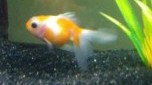
These fish were developed by breeding Oranda Goldfish with Pearlscale Goldfish. They have short and stubby bodies with pearl-like scales that have raised centers and dark perimeters. There are many color varieties like red, blue, black, calico, chocolate and color combinations. The Crown Pearlscale Goldfish is a variety of the Pearlscale Goldfish that develops a lump on its head. To keep these fish in captivity, water temperature should be between 65ºF and 72ºF and water pH should range from 6.0 to 8.0. The tank should have a gravel substrate and silk plants. These fish can be kept in a community tank with other slow moving fish, they shouldn’t be kept with fast species since these may eat all the food leaving none for them. They can be kept individually in a tank of at least 20 gallons or in groups, in this case, for each fish added the tank’s size should increase by 10 gallons.
Diet & nutrition
This species is omnivorous. It can be fed with dried foods complemented with live or frozen foods and with vegetable matter.
Breeding & spawning
To breed this species in captivity, the fish should be kept in a 20 gallon tank and fed with live food. The water temperature should be 60ºF and should be warmed 3ºF per day until they spawn. As temperature increases, the male will start to pursue the female which can last for several days, the male will start to push the female this will make her drop her eggs which the male will then fertilize. At this time, the adults should be removed from the tank to prevent them from eating the eggs. The eggs take 4 to 7 days to hatch.
Diseases
There is a parasite that latches onto goldfish called Goldfish ICH, this parasite feeds on the goldfish until it is fully grown, then it reproduces and starts the cycle again.
These fish are extremely susceptible to swim bladder disease and constipation due to their unusual body shape.
Origination
Although the Pearlscale Goldfish originated in China the Crown Pearlscale Variety originated in Japan.
Cautions
These fish need to be handled with care, their pearl-like scales can easily fall off and will regrow as regular scales.
Related articles
These will pull posts tagged to this species (not tied to the species record).
All photos
Tap a photo to open the gallery viewer.