Chao Phraya Giant Shark
Pangasius sanitwongsei
Featured guide
This will pull the most popular / featured article tagged to this species.
Water parameters
Water parameters are being added.
About Chao Phraya Giant Shark
General information
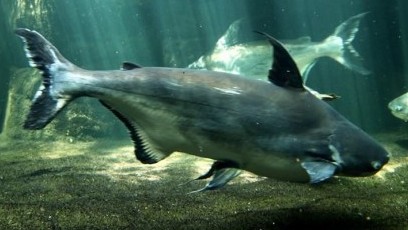
The Chao Phraya Giant Shark (Pangasius sanitwongsei) is a freshwater catfish native to the Chao Phraya and Mekong river basins in Southeast Asia. It is also known as the Giant Pangasius, Paroon Shark, or Siamese Shark. As its name suggests, it is a large fish that can grow up to 3 meters (10 feet) in length and weigh over 300 kg (660 pounds). It has a cylindrical body shape, a flattened head, and a small mouth with sharp teeth.
The Chao Phraya Giant Shark sharp teeth can cause injury if mishandled or provoked. It is important to handle them carefully and with caution.
Diet & nutrition
In the wild, the Chao Phraya Giant Shark is an opportunistic carnivore that feeds on a variety of fish, crustaceans, and mollusks. In captivity, they can be fed a diet of commercial pellets, frozen or live fish, shrimp, and worms. It is important to provide a balanced diet to ensure their health and growth.
Determining sex
It is difficult to determine the sex of Chao Phraya Giant Sharks without invasive methods such as dissection or hormone analysis. However, males may have a slightly larger head and dorsal fin than females.
Breeding & spawning
Breeding Chao Phraya Giant Sharks in captivity is challenging, and little is known about their breeding habits in the wild. They are believed to be migratory, moving upstream to spawn in the rainy season. In captivity, breeding can be stimulated by increasing water flow, temperature, and providing optimal water quality. Spawning typically occurs at night, and the eggs are adhesive and will stick to plants or rocks. The fry can be fed a diet of small live food such as brine shrimp.
Diseases
Like many fish species, the Chao Phraya Giant Shark is susceptible to a range of diseases such as bacterial infections, fungal infections, and parasites. It is important to maintain optimal water quality and monitor for any signs of illness such as lethargy, loss of appetite, or abnormal behavior.
Origination
The Chao Phraya Giant Shark is native to the Chao Phraya and Mekong river basins in Southeast Asia, including Thailand, Laos, Cambodia, and Vietnam.
Cautions
The Chao Phraya Giant Shark is a large and powerful fish that requires a large aquarium with appropriate filtration and space to swim. It is not suitable for beginner aquarists and should only be kept by experienced fish keepers with adequate facilities.
Acclimation process
When introducing Chao Phraya Giant Sharks to a new aquarium, it is important to acclimate them slowly to prevent stress or shock. This can be done by floating the bag in the aquarium for 15-20 minutes to allow for temperature adjustment, then slowly adding small amounts of aquarium water to the bag over a period of 30 minutes to an hour. The fish can then be gently released into the aquarium.
Related articles
These will pull posts tagged to this species (not tied to the species record).
All photos
Tap a photo to open the gallery viewer.