



- Name:
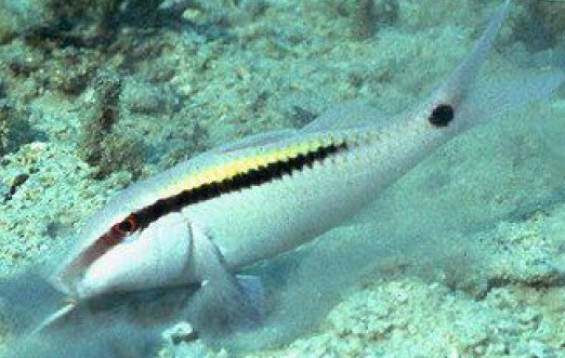
Yellow Back Goatfish
- Family: Mullidae
- Species: Goatfish
- Scientific Name: Parupeneus barberinus


More Details
General info about Yellow Back Goatfish
Goatfish hardy characters actively patrol the sand bed to satisfy their appetites, making them a unique addition to your FOWLR cleanup crew. Torpedo-shaped Goatfishes have a triangular cross-section, two separate dorsal fins, a slightly underslung mouth, and two distinctive firm barbels protruding from their chins. They use these whiskers to probe and taste for invertebrates buried in the substrate. Like goats, they roam in groups and forage the bottom for anything edible; worms, crustaceans, mollusks and other small invertebrates are staples. A large aquarium with plenty of swimming room is recommended, and it needs non-aggressive tank mates. The bottom of the tank should be sandy so it may use its barbels to sift through the substrate in search of food. Because it eats invertebrates, the nitrogen load capacity of the sand will be reduced and it will be well-oxygenated due to the sifting.
Original Detail
| Name | Species | Family | Scientific Name | More Detail | Added by |
|---|---|---|---|---|---|
| Yellow Back Goatfish | Goatfish | Mullidae | Parupeneus barberinus | Goatfish hardy characters actively patrol the sand bed to satisfy their appetites, making them a unique addition to your FOWLR cleanup crew. Torpedo-shaped Goatfishes have a triangular cross-section, two separate dorsal fins, a slightly underslung mouth, and two distinctive firm barbels protruding from their chins. They use these whiskers to probe and taste for invertebrates buried in the substrate. Like goats, they roam in groups and forage the bottom for anything edible; worms, crustaceans, mollusks and other small invertebrates are staples. A large aquarium with plenty of swimming room is recommended, and it needs non-aggressive tank mates. The bottom of the tank should be sandy so it may use its barbels to sift through the substrate in search of food. Because it eats invertebrates, the nitrogen load capacity of the sand will be reduced and it will be well-oxygenated due to the sifting. | PalaciosAn |
Changed by users
| Submitted Date | Submitted By | Status | Action |
|---|