
Sixray corydoras
Aspidoras pauciradiatus
Freshwater Fish
Species Group: Corydoras Catfish
Family: Callichthyidae
Log in or create an account to add this species to your tanks.
Water parameters
Water parameters are being added.
About Sixray corydoras
General information
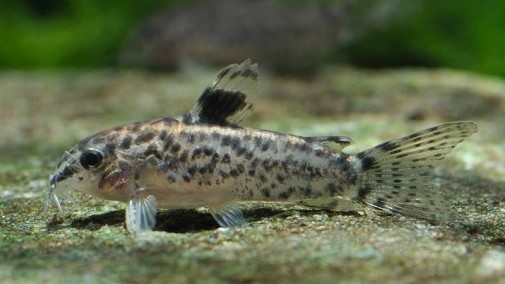
Aspidoras pauciradiatus is pale in color and has dark spots all over its body, its average size is 1.1 inches. They have the ability to tilt their eyes which looks like blinking. These fish are facultative air breathers, they have a highly vascularized intestine that facilitates uptake of atmospheric oxygen so they will often go to the surface for a gulp of air. Due to the ability for breathing atmospheric air, the aquarium should have a cover and the tank shouldn’t be filled to the top.
To keep this species in captivity, water pH should be between 6.0 and 7.2 and water temperature should range from 72ºF and 77ºF . The tank should have a sandy substrate, plants and hiding places. These fish can be kept in community aquariums and should be kept in groups of at least 5.
Diet & nutrition
Aspidoras pauciradiatus are omnivorous. In the wild, they feed on worms, benthic crustaceans, insects, and plant matter. They will eat almost anything that sinks into the bottom of the tank, you can feed them dried, live and frozen foods.
Breeding & spawning
They lays eggs in dense vegetation and adults do not guard the eggs.
Origination
Aspidoras pauciradiatus can be found in South America.
Cautions
This species should be kept in a tank with a sandy substrate or round gravel, sharp gravel may hurt its barbels.
Aspidoras pauciradiatus has hardened pectoral spines that can pierce human skin so they should be handled with care and a plastic container should be used to move them, using a net is not recommended because these spines may become entangled in the mesh.
These fish are scaleless and as such they are extremely sensitive to salt, adding salt to the tank will hurt them.
Acclimation process
These fish are nocturnal so they should be fed at lights out, however, after some time in the tank they may be “taught” to eat during the day.
All photos
Tap a photo to open the gallery viewer.