
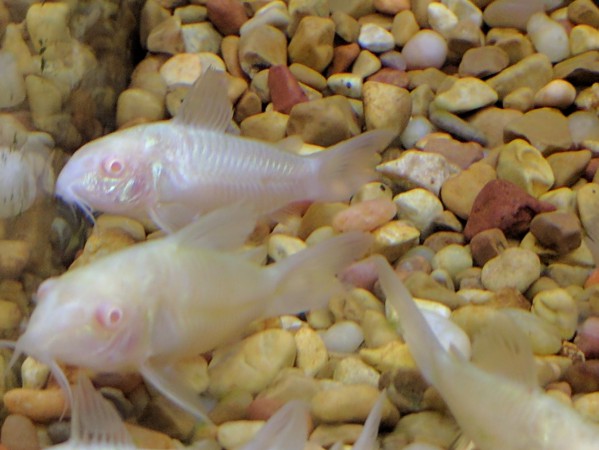
Albino Aeneus Cory Cat
Corydoras aeneus
Freshwater Fish
Species Group: Corydoras Catfish
Family: Callichthyidae
Log in or create an account to add this species to your tanks.
Water parameters
Water parameters are being added.
About Albino Aeneus Cory Cat
General information
This species has a life span of 10 years or more and the average adult is 1.5 inches to 2.8 inches. They are peaceful and gregarious so it is recommend to keep them in groups of at least 6 and with species that are small and peaceful. They can breathe air so they often go to the surface for a bit of fresh air, they also have an evolved sense of smell, barbs that allow the individual to find food buried in the substrate and an ability to tilt their eyes appearing as if they were blinking. This species is recommended for beginner aquarists. Aquariums should be densely vegetated to help diffuse the light and to provide for cover and hiding places.
Diet & nutrition
This species is omnivore. In the wild they feed on worms, invertebrates and plant matter and in an aquarium they can be fed with dried food and live foods, a varied diet is important to maintain good health.
Since Corydora aeneus is nocturnal, it should be fed at lights out. They can be fed during the day but at this time they are slower and can be easily outcompeted by their tankmates. They only eat food that has sunk making some people say they are cleaners and that they can be fed with leftovers from their tankmates, this is not true.
Determining sex
Females are larger than males, when looking from above the females appear much wider than the males.
Breeding & spawning
Eggs are usually deposited in rocks, leaves or in the aquarium’s glass. Spawning occurs when there are changes in the water conditions caused by the arrival of the rainy season.
Origination
This species can be found throughout South America. It prefers slow, shallow waters with a sandy substrate, occasionally, it can be found in running water.
Cautions
In an aquarium it is best to use a fine sand substrate and rounded gravel since sharp gravel may hurts its barbs and mouth, it is also important to keep the substrate clean to avoid a build up of bacteria that may hurt the barbs.
Many species of Corydoras have a venom gland in their barbs that sting the predators that are trying to eat them. This venom is harmless to humans but might irritate the skin.
All photos
Tap a photo to open the gallery viewer.