-
-
-
-
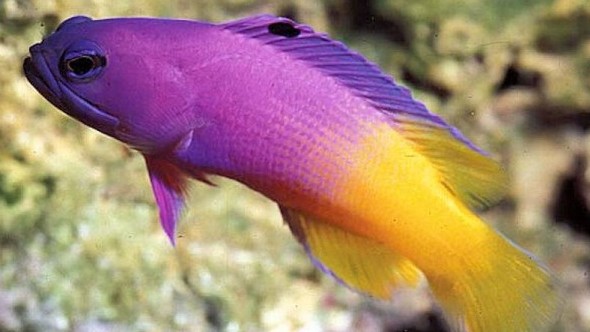
Brazilian Gramma
General information The Brazilian Gramma is a small, peaceful fish that can reach up to 3 inches (7.6 cm) in length. It is a popular choice for reef aquariums due to its bright colors and ease of care. The fish has a purple head and bright yellow body, and a black line separates the two…
-
-
-
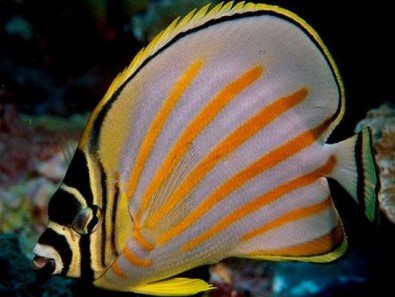
Ornate Butterflyfish
General information The Ornate Butterflyfish (Chaetodon ornatissimus) is a small, colorful, and popular saltwater aquarium fish. They are typically found in the Indo-Pacific region, from the Red Sea to the western Pacific Ocean, and are commonly seen around coral reefs in shallow waters. They have a distinctive and ornate pattern of yellow, black, and white…
-
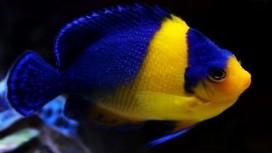
Venusta Angelfish
General information Venusta angelfish are somewhat rare dwarf angelfish that has a yellow body and face area, with a triangular blue patch on top of the head, and a blue colored saddle area that starts near the front dorsal fin and extends overs the rear portion of the body and caudal fin. Anal and pelvic fins…
-
-
Red Sea Cleaner Wrasse
Cautions Wrasse are considered jumpers make sure your aquarium has a tight-fitting canopy or screen cover to prevent the Wrasse from jumping out of your aquarium. Wrasse have been known to jump through the smallest of holes in a canopy. Wrasses prefer to have a 2″ (5cm) sandbed to allow them to burrow into the sand to sleep…