-
-
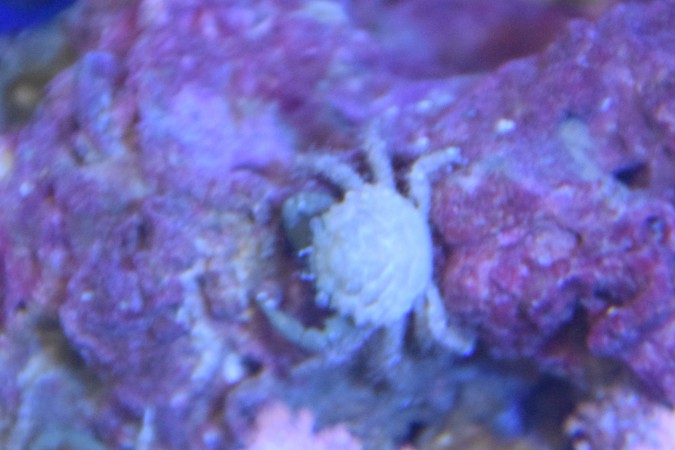
Emerald Crab
General information The Emerald Crab is known for its scavenging ability. It will enthusiastically feed on uneaten meaty foods and many types of nuisance algae. Its distinct, flat shiny green body and hairy legs easily identify the Emerald Crab. It grows up to about 4 cm (1.6 in). Native to the reefs of the Caribbean,…
-
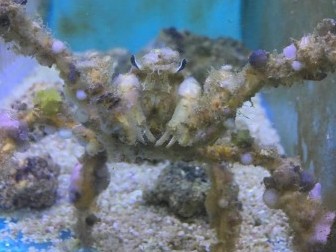
Spider Decorator Crab
General information The Spider Decorator Crab has a brown body with sponges, shells, and rocks that are attached to it, helping it to camouflage. It naturally hunts for food at night. It can grow up to 4 inches.
-
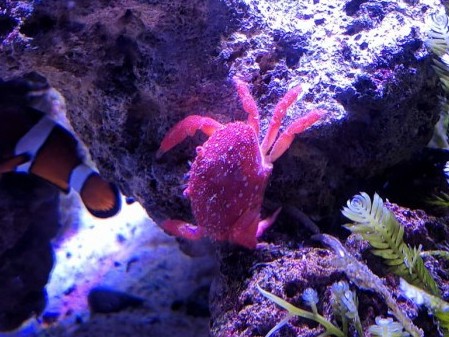
Strawberry Crab
General information The Strawberry Crab or Red Boxing Crab is bright pink in color with numerous white spots. Their claws are blunt and flat that are made for picking up algae. They can grow up to about 5 cm (2 in) wide. They interact harmoniously with other invertebrates in the aquarium and so they are…
-
Orange or Red Tile Sea Star
General information The Tile Sea Star, or Marble Starfish, is one of the more common of the Fromia species, its coloration making it one of the most striking of all the sea stars. Its central disc will have an orange to deep red color, while its arms have cream-colored spots with a red edging. It…
-
-
Lima Shrimp
General information The Lima Shrimp or Lima Boxer Shrimp is a very poorly known marine crustacean from the Caribbean. Lima shrimp are tiny too, growing to have a body length of only half an inch long, with enlarged primary claws that make them look larger. Brilliant red coloration of the Lima Shrimp helps it to live in flame…
-
Chestnut Cowrie
General information The Chestnut Cowrie with its egg-shaped shell colored orange, tan, brown and white. The opening in the shell has teeth, which provides protection from predators. The mantle extends through this opening and completely covers the shell unless the snail feels threatened. The Chestnut Cowrie is native to the deeper and colder ocean waters…
-
Crocea Clam, Ultra
General information The family Tridacnidae contains a number of clams that are common in the aquarium trade. Collectively, they are commonly called “Tridacna Clams” by hobbyists. These animals are beautiful, interesting, and highly variable, with no two clams looking alike. Their colorful mantles contain photosynthetic zooxanthellae, similar to corals. Although very beautiful, clams are not for everyone….
-
Cleaner Clam
General information <div>The Cleaner Clam, <em>Mercenaria mercenaria</em>, is a durable, beneficial, and functional addition to any tank. They are diligent water-cleansers and algae-eaters. Cleaner clams are essential members of any janitorial crew. They do not require light as they will spend much of their time burrowed under a sandy substrate. </div> <div> </div> <div>The Cleaner Clam often goes…