Saltwater

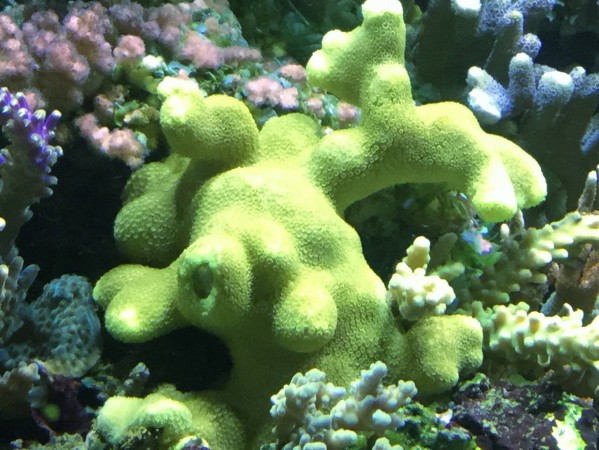
  • Rainbow Fusion Acan

    General information This is the ideal range of water parameters for raising Rainbow Fusion Acan in captivity: Calcium: 400 – 450 ppm Alkalinity: 3.2 – 4.8 MEQ/L Phosphates: 0 Magnesium: 1200 – 1350 Strontium: 8 – 10 Temperature: 76° – 83° F (24° – 28° C) Salinity / Specific Gravity: 1.023 – 1.025

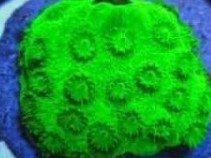
  • Cherry Blossom Favia

    General information In general, the genus Favia have large coral colonies that are circular in shape and comes in the form of massive, submassive and encrusting type. At a first glance, you can mistakenly identify Favia with Favites. However, with a closer look, Favia and Favites can easily be differentiated. Favites have corallite walls that…

  • Lemon Lime Goni

    General information In general, corals coming from the genus Goniopora have numerous corallites that are walled invidually. Each corallite has a polyp that is usually exposed and extended. Their polyps are usually long, has a daisy-like tips each having 24 tentacles and sways like a flower tube. As for the Lemon Lime Goniopora, they are…

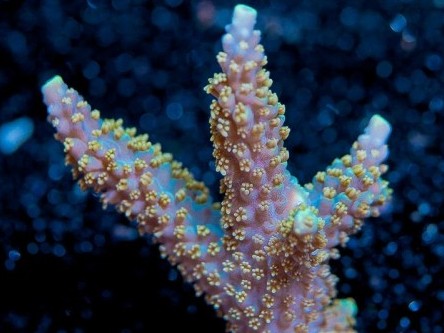
  • Spectrum Acan Echinata

    General information In the wild, Spectrum Acan Echinata Acan comes in two forms: either encrusting or massive. Their colonies may reach over a meter in length. They have circular corallites with thick walls and septa that have long and pointed teeth. Their skeleton is covered with a dense, fleshy tissue that usually forms a concentric…

  • Orange Lepto

    General information In general, corals from the genus Leptoseris usually take the form of encrusting, foliose or plate type. Their colonies are laminar in nature which forms whorls, folds or tiers. Their corallites are arranged in an irregular pattern that usually runs parallel to the margins. For the Orange Lepto, they are predominatly colored orange….

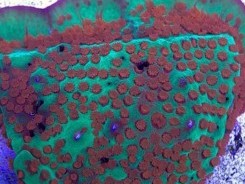
  • Strawberry Shortcake Favia

    General information In general, the genus Favia have large coral colonies that are circular in shape and comes in the form of massive, submassive and encrusting type. At a first glance, you can mistakenly identify Favia with Favites. However, with a closer look, Favia and Favites can easily be differentiated. Favites have corallite walls that…

  • Triton Favia

    General information In general, the genus Favia have large coral colonies that are circular in shape and comes in the form of massive, submassive and encrusting type. At a first glance, you can mistakenly identify Favia with Favites. However, with a closer look, Favia and Favites can easily be differentiated. Favites have corallite walls that…

  • Long Polyp Green Alveopora

    General information In general, Alveopora corals have colonies with corallites that are short. When all of its polyps are open, it creates a divided and irregular knob-like branches that looks like a buoquet of flowers. While they closely look like a Goniopora, it is very easy to distinguish their difference. Just take a closer look…

  • Aussie Goniastrea

    General information In general, corals coming from the genus Goniastrea have polyps that are seldom exposed, except during night. Their corallites with walls that are fused and common, where it collectively looks like a brain and this its name. For the Aussie Goniastrea, they are predominatly colored violet with green mouth. This are the water…