-
-
-
Black Sun Corals
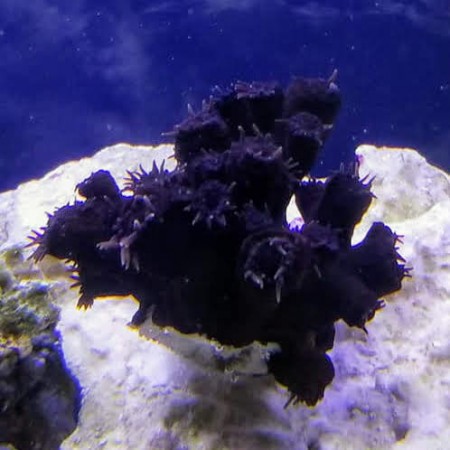
Diet & nutrition Unlike most corals, the Sun Corals are not photosynthetic. The Sun Corals doesn’t host zooxanthellae, the symbiotic algae that provide energy to the coral via photosynthesis. Instead, they are heterotrophic, and extend long tentacles at night to catch passing zooplankton; their large polyp size allows them to take relatively large zooplankton. How…
-
Frozen Apples Zoas
General information <div class="more_detail"> <div class="more_detail">Zoanthids feature a hard exoskeleton and are considered one of the most durable inhabitants in a reef aquarium making them the perfect piece for newbie aquarist. Their appearance resembles like a cluster of miniature sea anemones that often creates a hard matting appearance. While they look similar with sea anemones,…
-
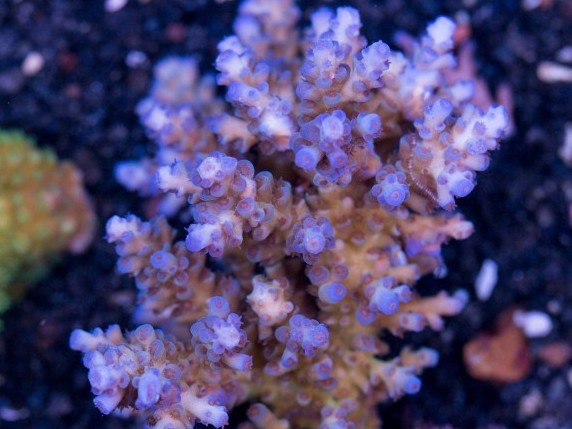
White Morning Acro
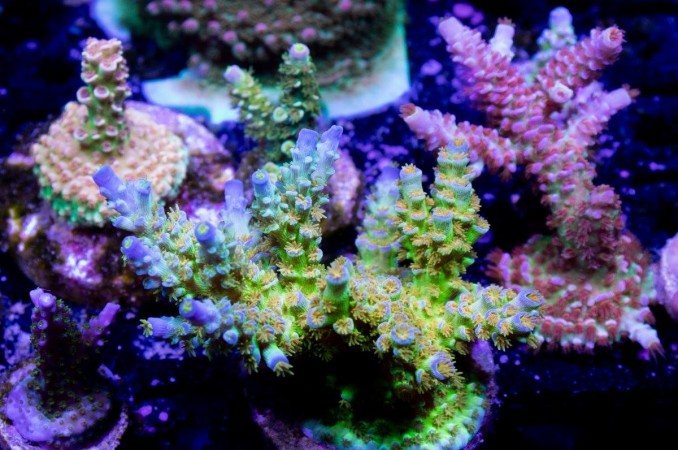
General information In general, species from Acropora may grow either as a plate, slender or broad branching type of reef-building corals. Each branch has several colonies that are composed of several corallites. When undisturbed, their polyps will extend. But it will retract and hide inside the pores as a response to water movement or threat…
-
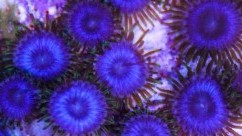
Caribbean Blue Zoas
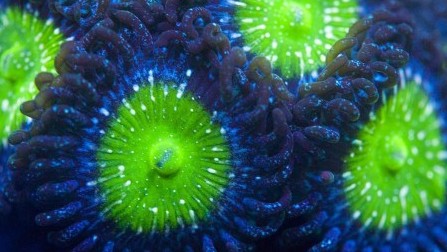
General information Zoanthids are a perfect coral for the newbie to the aquarists’ hobby. Their appearance resembles a cluster of miniature sea anemones that often creates a hard matting appearance. While they look similar to sea anemones, Zoanthids are generally smaller with an oral disc measuring only from 1 to 2 centimeters in diameter. This…
-
-
-
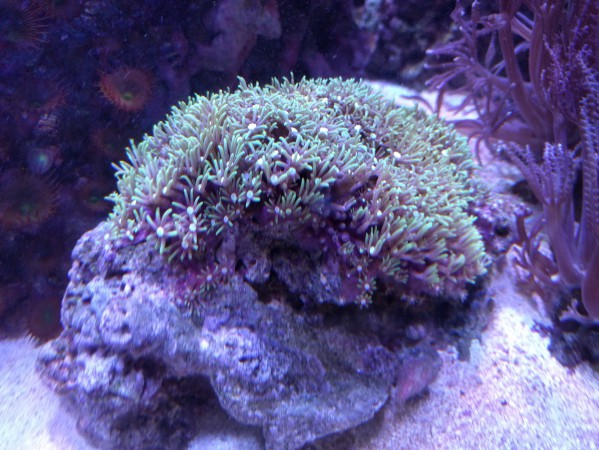
Starburst Polyp
General information In general, soft corals coming from the genus Clavularia has many individual polyps that is binded altogether in one colony. They are a small-sized colony averaging only 3 inches (7.6 centimeters) in height. They are ideal for newbie aquarist since they have no calcified skeleton making them highly tolerant to nutrient fluctuation, especially…
-
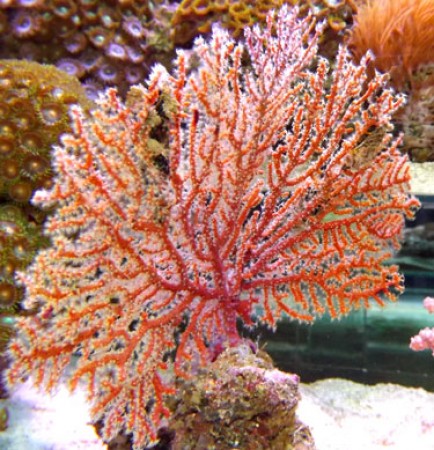
Red Finger Gorgonian
General information The Red Finger Gorgonian is considered a highly attractive specimen due to its color variation. It is either colored orange yellow with red and white polyps or red purple with white polyps. Contrary to the large sea fans we see in the reef, this particular species is relatively small in size and has…