Saltwater

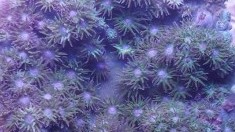
  • Electric Gold Torch Euphyllia

    General information In general, corals from the genus Euphyllia have long tentacles that may stretch out 2 to 4 inches and are usually extended out most of the time. When the polyps are retracted, you can clearly see that each corallite is completely separated from each other and is encased by its own wall. For…
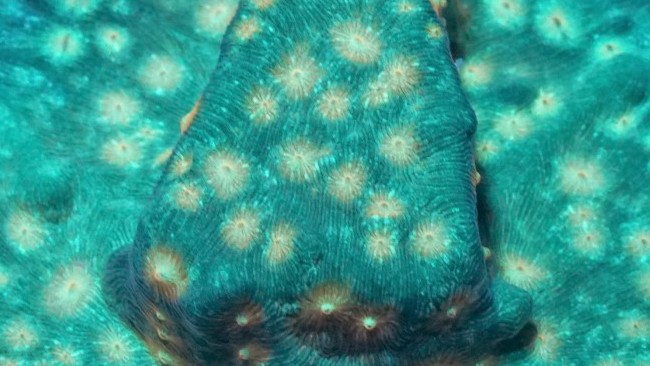
  • Green Goblin Scroll Coral

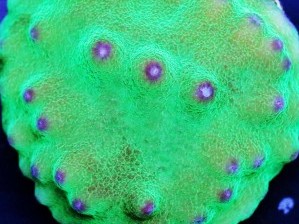
    General information In general, corals from the genus Turbinaria has a shape that resembles like a cone or cup. They may also take the form of ruffled ridges, plates, vases, or scrolls. Their polyps are usually exteneded all the time and may project in a vertical or horizontal position. For the Green Goblin Scroll Turbinaria, they…

  • Bright Orange Fungia

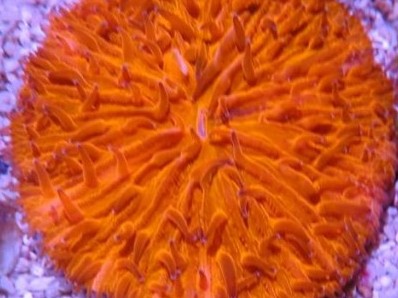
    General information In general, corals coming from the genus Fungia are solitary animals. Unlike your typical coral, Fungia coral is not composed of a colony, but instead, is a  single-polyp coral. It has a flattened skeletal structure that resembles like a disc. Its corallite walls are highly elevated forming plates and their mouth is located…

  • Fiji Echinata

    General information In the wild, Fiji Echinata comes in two forms: either encrusting or massive. Their colonies may reach over a meter in length. They have circular corallites with thick walls and septa that have long and pointed teeth. Their skeleton is covered with a dense, fleshy tissue that usually forms a concentric fold. For the…

  • Marshan Landing Lepto

    General information In general, corals from the genus Leptoseris usually take the form of encrusting, foliose or plate type. Their colonies are laminar in nature which forms whorls, folds or tiers. Their corallites are arranged in an irregular pattern that usually runs parallel to the margins. This are the water parameters for cultivating Marshan Landing…

  • Purple Polyp Scroll Turbinaria

    General information In general, corals from the genus Turbinaria has a shape that resembles like a cone or cup. They may also take the form of ruffled ridges, plates, vases, or scrolls. Their polyps are usually exteneded all the time and may project in a vertical or horizontal position. For the Purple Polyp Scroll Turbinaria, they…

  • White Lightning Lepto

    General information In general, corals from the genus Leptoseris usually take the form of encrusting, foliose or plate type. Their colonies are laminar in nature which forms whorls, folds or tiers. Their corallites are arranged in an irregular pattern that usually runs parallel to the margins. For the White Lightning Lepto, they are predominatly colored…

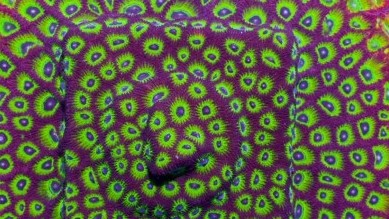
  • Lemon Lime Favia

    General information In general, the genus Favia have large coral colonies that are circular in shape and comes in the form of massive, submassive and encrusting type. At a first glance, you can mistakenly identify Favia with Favites. However, with a closer look, Favia and Favites can easily be differentiated. Favites have corallite walls that…

  • Molten Lava Lepto

    General information In general, corals from the genus Leptoseris usually take the form of encrusting, foliose or plate type. Their colonies are laminar in nature which forms whorls, folds or tiers. Their corallites are arranged in an irregular pattern that usually runs parallel to the margins. For the Molten Lava Lepto, they are predominatly colored…

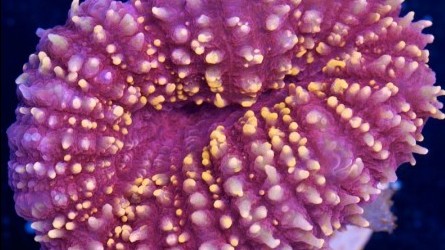
  • Orange Dot Lobophyllia

    General information In general, corals coming from the genus Lobophyllia are called Brain Corals. They have fleshy polyps that can be retracted deep within its calcareous skeleton. It features a variety of textures and colors wheer some are smooth, pimply while some resembles like a carpet. This are the water parameters in cultivating Orange Dot…