Saltwater

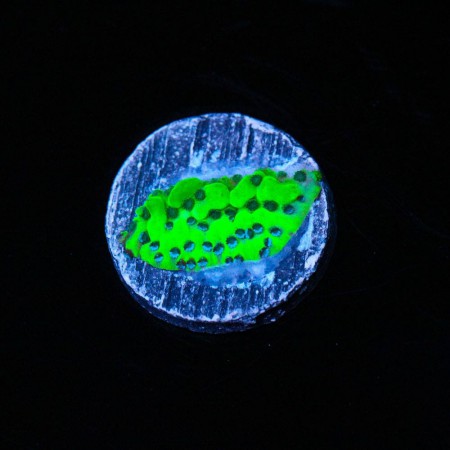
  • Chameleon Astreopora

    General information In general, Astrepora corals have colonies that are rounded or dome-shaped. Their corallites are distinct, separated and uneven while their exoskeleton are porous. For the Chameleon Astreopora, they are predominatly colored dark green with light green circles at the tips. This are the water parameters for cultivating Chameleon Astreopora: Calcium: 400 – 450…

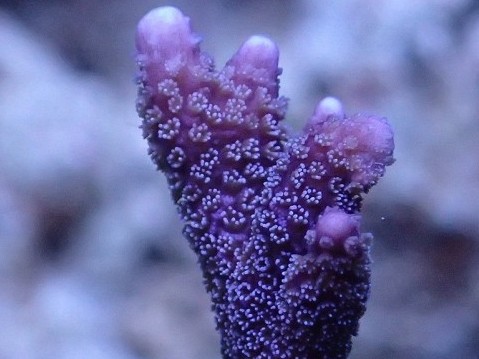
  • Purple Licious Cyphastrea

    General information In general, species from Cyphastrea are fast growing when you compare it to other mound-building corals. They usually grow in an encrusting form and can visually see a difference in size within 6 months. Newbies can cultivate Cyphastrea since they are easy to care and maintain. They can grow in a wide range…

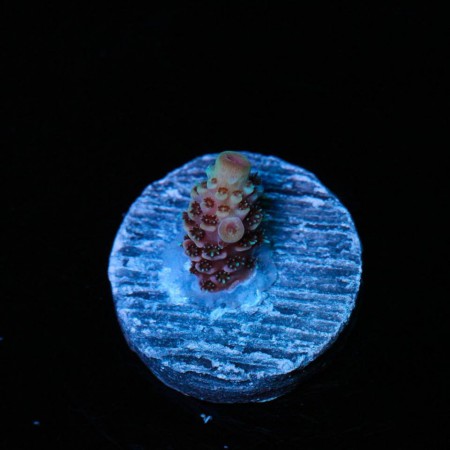
  • Firefly Acropora

    General information In general, species from Acropora may grow either as a plate, slender or broad branching type of reef building corals. Each branch has several colonies that is composed of several corallites. When undisturb, their polyps will extend. But it will retract and hide inside the pores as a response to water movement or…

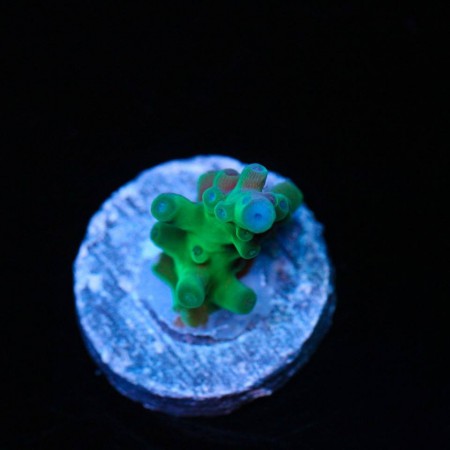
  • Green Goblet Acropora

    General information In general, species from Acropora may grow either as a plate, slender or broad branching type of reef building corals. Each branch has several colonies that is composed of several corallites. When undisturb, their polyps will extend. But it will retract and hide inside the pores as a response to water movement or…

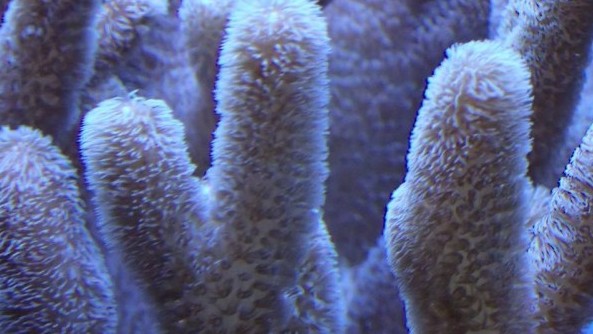
  • Highlighter Orange Pavona

    General information In general, corals from the genus Pavona takes different coral lifeforms like massive, columnar, leaf-like or plate-like where this can be influenced by current, wave action, depth and lighting condition. Pavona can easily be identified since they have no corallite walls. Instead, their corallites have a shallow depression where each is clearly delineated…

  • Barney Acro

    General information In general, species from Acropora may grow either as a plate, slender or broad branching type of reef building corals. Each branch has several colonies that is composed of several corallites. When undisturb, their polyps will extend. But it will retract and hide inside the pores as a response to water movement or…

  • Green Eggs and Ham Montipora

    General information In general, corals coming from the genus Montipora takes several coral lifeform like submassive, laminar, foliaceous, encrusting and branching. Their appearance and coloration is usually mottled in nature.  They have corallites that are considered one of the smallest as far as the family of corals is concerned. Their walls usually has an elaborate structure…

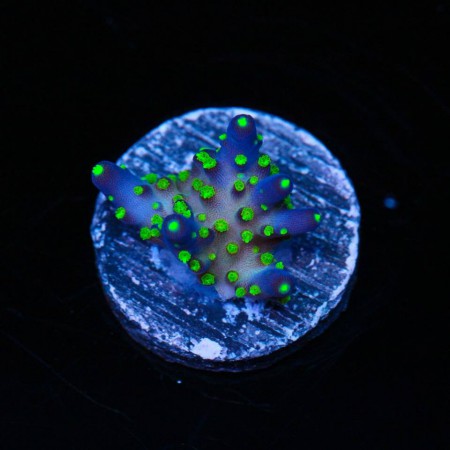
  • Papa Smurf Acro

    General information In general, species from Acropora may grow either as a plate, slender or broad branching type of reef building corals. Each branch has several colonies that is composed of several corallites. When undisturb, their polyps will extend. But it will retract and hide inside the pores as a response to water movement or…

  • Serial Killer Acropora

    General information In general, species from Acropora may grow either as a plate, slender or broad branching type of reef building corals. Each branch has several colonies that is composed of several corallites. When undisturb, their polyps will extend. But it will retract and hide inside the pores as a response to water movement or…

  • Time Warp Psammocora

    General information In general, corals coming from the genus Psammocora are known to initially grow in an encruting form. After they have encrusted much of the surface they are growing on, they will start to grow branches that are usually thick and is spread throughout their entire colony. When their tentacles in the polyps are…