-
-
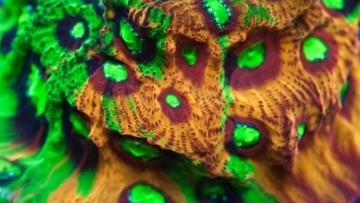
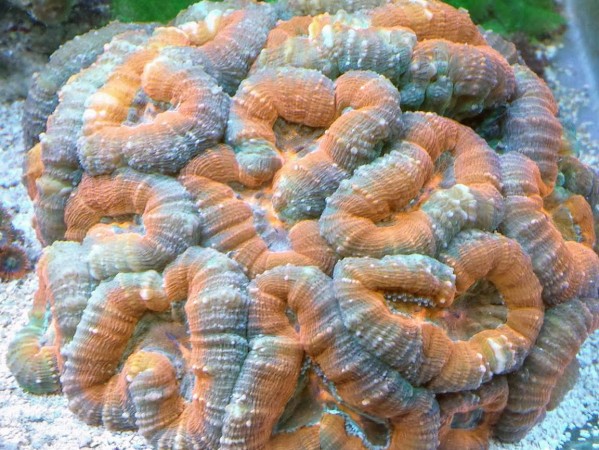
Rain of War Favia
General information In general, the genus Favia have large coral colonies that are circular in shape and comes in the form of massive, submassive and encrusting type. At a first glance, you can mistakenly identify Favia with Favites. However, with a closer look, Favia and Favites can easily be differentiated. Favites have corallite walls that…
-
Green Loby Platygyra
General information In general, corals coming from the genus Platygyra either comes in a massive or encrusting form. Instead of the typical circular shaped wall which is common in the Faviidae family, their corallite walls are long and elongated that usually creates a maze-like pattern. For the Green Loby Platygyra, they are predominatly colored yellow…
-
-
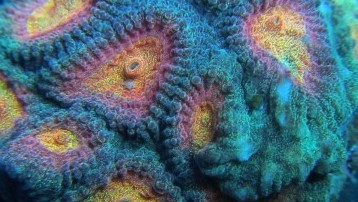
Bowser Bowerbanki
General information Bowser Bowerbanki is small encrusting corals that have corallites with an irregular angular shape. The central corallite is conspicuous with compact septa and small columellae. This is one of the few species of Acanthastrea that is not fleshy. Its general color range from pale gray or brown and is often mottled. This is…
-
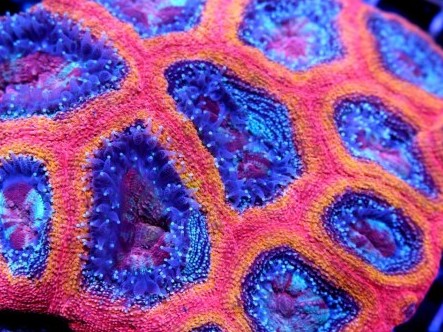
Sebastians Favia
General information In general, the genus Favia have large coral colonies that are circular in shape and comes in the form of massive, submassive and encrusting type. At a first glance, you can mistakenly identify Favia with Favites. However, with a closer look, Favia and Favites can easily be differentiated. Favites have corallite walls that…
-
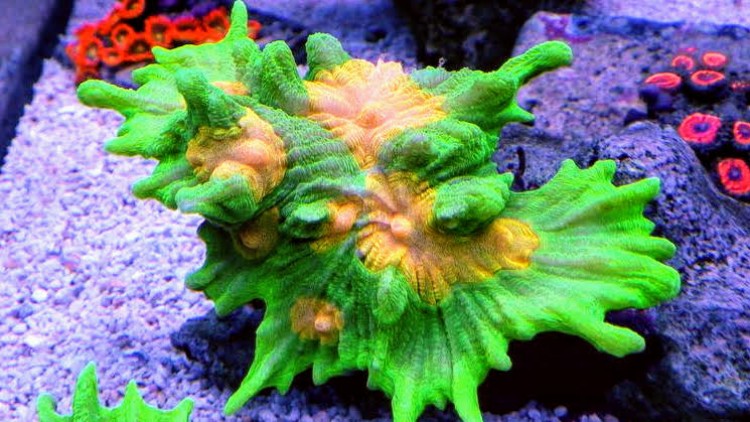
Space Invader Pectinia
General information In general, corals coming from the genus Pectinia has a foliose type of coral growth. They usually form cabbage-like colonies with branches that are ruffled and terminate their edges with very sharp points. For the Space Invader Pectinia, they are predominatly colored green and yellow. This are the water parameters for cultivating…
-
Tequila Sunrize Favia
General information In general, the genus Favia have large coral colonies that are circular in shape and comes in the form of massive, submassive and encrusting type. At a first glance, you can mistakenly identify Favia with Favites. However, with a closer look, Favia and Favites can easily be differentiated. Favites have corallite walls that…
-
-
Aussie Bicolor Lobo
General information In general, corals coming from the genus Lobophyllia are called Brain Corals. They have fleshy polyps that can be retracted deep within its calcareous skeleton. It features a variety of textures and colors wheer some are smooth, pimply while some resembles like a carpet. As for the Aussie Bicolor Lobo, they are predominantly…