Saltwater

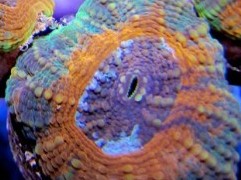
  • Fire Echinopora lamellosa

    General information In general, corals from the Genus Echinopora have large coral colonies that are circular in shape and takes in the form of massive, submassive and encrusting type. Their corallite walls are not well pronounced, but their mouth can be clearly spotted which is usually elevated. For the Fire Echinopora lamellosa, they are predominatly colored…

  • Halloween Chalice Pectinia

    General information In general, corals coming from the genus Pectinia has a foliose type of coral growth. They usually form cabbage-like colonies with branches that are ruffled and terminate their edges with very sharp points.   This are the water parameters for cultivating Halloween Chalice Pectinia: Calcium: 380 – 430 ppm Alkalinity: 3.2 – 4.8…

  • Miami Hurricane Chalice Mycedium

    General information In general, corals coming from the genus Mycedium takes the flat, laminar plane or plate type of coral growth. Their colonies have several plates that may originate from different points or planes. One distinct characteristics for a Mycedium coral is that their corallites are raised, tubular and has angular outward growth that forms…

  • Lizard Skin Chalice

    General information In general, species from Echinophyllia has an encrusting growth where their colonies can form folds or cups. The corallites that are located at the middle are usually elevated with warty bumps. The color of their mouth usually has a different color from their fleshy body. For the Psychedelic Lizard Skin Chalice Echinophyllia, they…

  • Sour Apple Chalice

    General information In general, species from Echinophyllia has an encrusting growth where their colonies can form folds or cups. The corallites that are located at the middle are usually elevated with warty bumps. The color of their mouth usually has a different color from their fleshy body. For the Sour Apple Chalice Echinophyllia, they are…

  • Wildfire Chalice

    General information In general, species from Echinophyllia has an encrusting growth where their colonies can form folds or cups. The corallites that are located at the middle are usually elevated with warty bumps. The color of their mouth usually has a different color from their fleshy body. This are the water parameters for cultivating Wildfire…

  • Fascination Favia

    General information In general, the genus Favia have large coral colonies that are circular in shape and comes in the form of massive, submassive and encrusting type. At a first glance, you can mistakenly identify Favia with Favites. However, with a closer look, Favia and Favites can easily be differentiated. Favites have corallite walls that…

  • Bdazzled Cyphastrea

    General information In general, species from Cyphastrea are fast growing when you compare it to other mound-building corals. They usually grow in an encrusting form and can visually see a difference in size within 6 months. Newbies can cultivate Cyphastrea since they are easy to care and maintain. They can grow in a wide range…

  • Branching Lobophyllia Dentatus

    General information In general, corals coming from the genus Lobophyllia are called Brain Corals. They have fleshy polyps that can be retracted deep within its calcareous skeleton. It features a variety of textures and colors wheer some are smooth, pimply while some resembles like a carpet. This are the water parameters in cultivating Branching Lobophyllia…

  • Awesome Blasto

    General information In general, the Blastomussa corals has many small corallites that is usually swollen and round in shape. When the polyps are out,  the entire colony will look similar to a mushroom anemone. For the Awesome Blasto, they are predominatly colored red with neon green mouth. This are the water parameters for cultivating Awesome…