-
-
Arrow Crab
General information The Arrow Crab has extremely long legs. It is called the Arrow Crab because of the shape of the body and head. The size is variable, many reaching six inches, and some up to 10 inches. Females may be dramatically smaller. Different species inhabit different parts of the world. They normally inhabit portions…
-
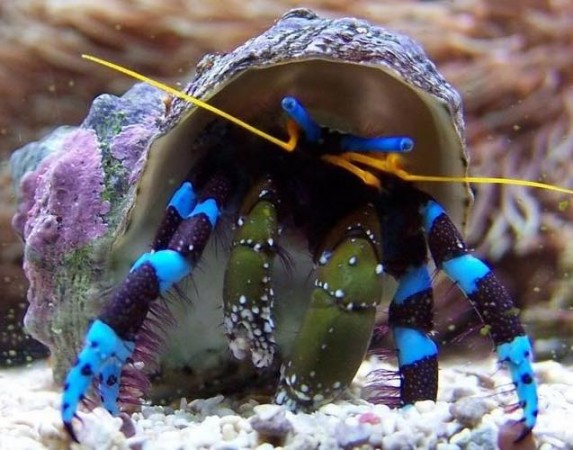
Electric Blue Hermit Crab
General information The Electric Blue Hermit Crab is very attractive due to its electriying blue legs with black bands and its bright orange antennae. Its claws are colored brownish green. Like other hermit crabs, it also lives inside abandoned snail shells. It can grow up to 3/4′ to 1-1/2′ in. It is beneficial to the aquarium…
-
Tiger Tail Sea Cucumber
General information The Tiger Tail Sea with its brown body spotted with white and dressed in numerous spiny papillae, Holothuria sp. is also a visually stunning addition to the home aquarium. Since it is a very adept and agile scavenger, the Tiger Tail Sea Cucumber can clean detritus from beneath rockwork and difficult-to-clean tight corners….
-
Fancy Yellow Brittle Sea Star
General information The Yellow Fancy Brittle Sea Star of the Ophiarachna genus has a very small olive green central disc which may have variable patterns. The long spiny, yellow arms are fringed with white or black spines. It is nocturnal and often hides under rocks during the day. At night, it comes out to eat…
-
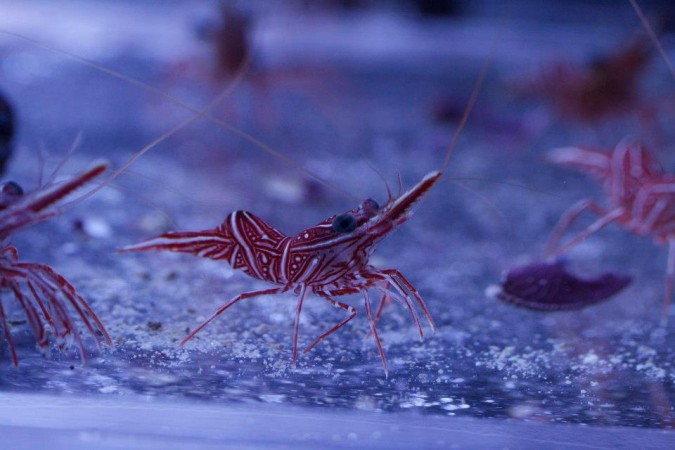
Camel Shrimp
General information The Camel Shrimp is also commonly referred to as the Hinge-beak Shrimp, Dancing Shrimp, or Candy Shrimp within the aquarium trade. The Camel Shrimp is distinguished by a movable rostrum (beak) that is usually angled upwards. The Camel Shrimp has a variable pattern of red and white stripes on its body with claws…
-
-
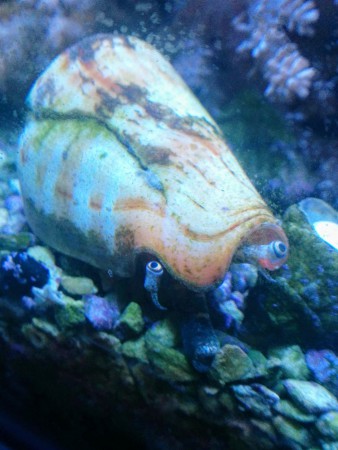
Fighting Conch
General information The beneficial Fighting Conch is not as aggressive as its name implies. Though a male Fighting Conch can be territorial towards other males of its own kind, the Fighting Conch is peaceful towards other tank mates. The Fighting Conch is a suitable addition to any home reef aquarium, where it will use its…
-
Derasa Clam, Cook Island
General information The Derasa Clam is the most widely available and hardy of the Tridacna clams. Along with its cousin, Tridacna gigas, it was one of the of the first aquacultured species of Tridacna clams. A giant clam just sitting in still may seem like a rather unlikely choice for the aquarium. But after one look…
-