
Saltwater

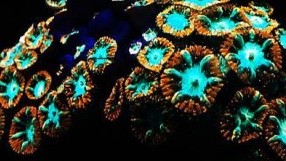
  • Red and Green Blasto

    General information In general, the Blastomussa corals has many small corallites that is usually swollen and round in shape. When the polyps are out,  the entire colony will look similar to a mushroom anemone. For the Red and Green Blastomussa merletti, they are predominatly colored red with green mouth. This are the water parameters for…
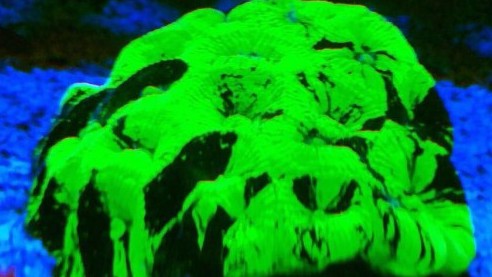
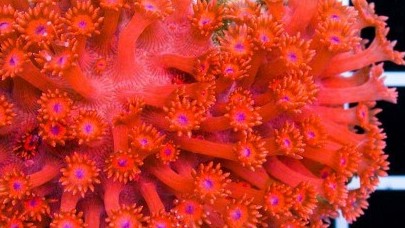
  • Havok Acan

    General information This is the ideal range of water parameters for raising Havok Acan in captivity: Calcium: 400 – 450 ppm Alkalinity: 3.2 – 4.8 MEQ/L Phosphates: 0 Magnesium: 1200 – 1350 Strontium: 8 – 10 Temperature: 76° – 83° F (24° – 28° C) Salinity / Specific Gravity: 1.023 – 1.025

  • Toxic Scoly

    General information In general, corals coming from the genus Scolymia are round solitary corals that has a single mouth located at the center. Their coloration usually has an alternating radial bands with a cup, saucer, flat or dome shaped variations. As for the Toxic Scoly, they are predominantly colored green with pink perpendicular lines. This…

  • Starry Cup Coral

    General information The Starry Cup Coral are large reef-building corals that usually takes the massive and encrusting form. Their corallites are irregularly shaped that forms short valleys with several centers. They have a moderate flesh cover that is usually colored red, cream or brown with a contrasting color on the wall and mouth. This is…

  • Tokyo Tart Acan

    General information The Tokyo Tart Acan has a pink colored mouth with a distinct X mark that is colored yellow. Its columnae is a horizontal combination of pink and yellow. This is the ideal range of water parameters for raising Tokyo Tart Acan in captivity: Calcium: 400 – 450 ppm Alkalinity: 3.2 – 4.8 MEQ/L…

  • Aussie Donut Coral

    General information The Aussie Donut Coral is a solitary coral and has a base for attachment. But when it is not sessile or free living, its base is pointed. It has a thick primary septa with large round teeth. Its culumnae are broad and compact. The mantle may exceed twice the size of its exoskeleton…

  • Aussie Ultra Platygyra

    General information In general, corals coming from the genus Platygyra either comes in a massive or encrusting form. Instead of the typical circular shaped wall which is common in the Faviidae family, their corallite walls are long and elongated that usually creates a maze-like pattern. For the Aussie Ultra Platygyra, they are predominatly colored green…

  • Indo Pink Goni

    General information In general, corals coming from the genus Goniopora have numerous corallites that are walled invidually. Each corallite has a polyp that is usually exposed and extended. Their polyps are usually long, has a daisy-like tips each having 24 tentacles and sways like a flower tube. As for the Indo Pink Goniopora, they are…

  • Upscales Dragons Eye Montastrea

    General information In general, corals coming from the genus Montastrea usually has an encrusting or massive type of coral growth. They colonies are spherical and is composed of several corallites that are circular in shape and are closely compacted to each other. For the Upscales Dragons Eye Montastrea, they are predominatly colored blue with red…