Saltwater

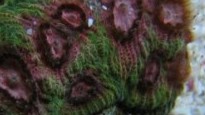
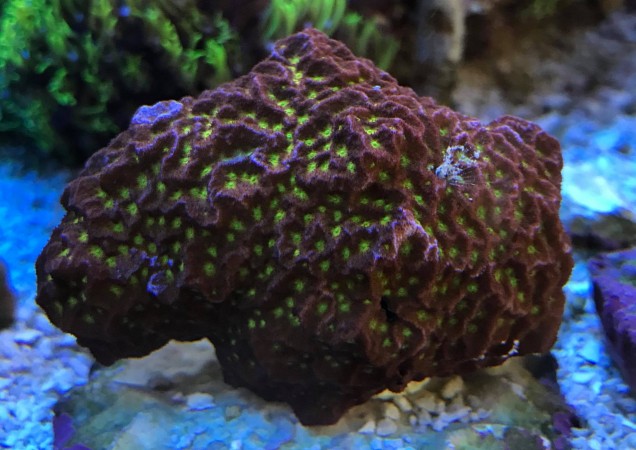
  • Ocean Green Favia

    General information In general, the genus Favia have large coral colonies that are circular in shape and comes in the form of massive, submassive and encrusting type. At a first glance, you can mistakenly identify Favia with Favites. However, with a closer look, Favia and Favites can easily be differentiated. Favites have corallite walls that…

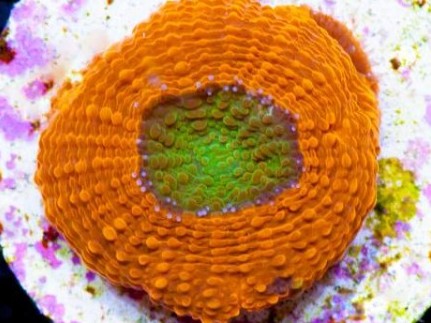
  • Original Mummy Eye Echinophyllia

    General information In general, species from Echinophyllia has an encrusting growth where their colonies can form folds or cups. The corallites that are located at the middle are usually elevated with warty bumps. The color of their mouth usually has a different color from their fleshy body. For the Original Mummy Eye Echinophyllia, they are…

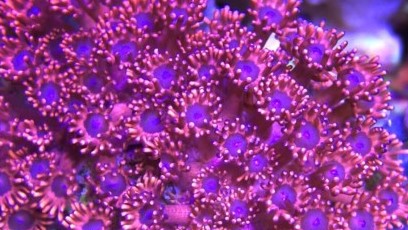
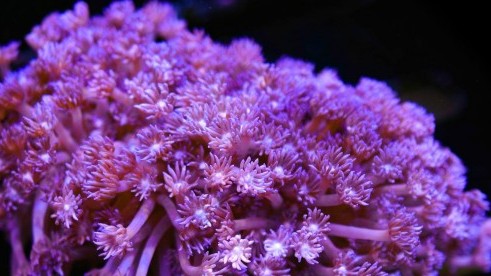
  • Toxic Green Goni

    General information In general, corals coming from the genus Goniopora have numerous corallites that are walled invidually. Each corallite has a polyp that is usually exposed and extended. Their polyps are usually long, has a daisy-like tips each having 24 tentacles and sways like a flower tube. As for the Toxic Green Goniopora, they are…

  • Red Blastomussa Wellsi

    General information In general, the Blastomussa corals has many small corallites that is usually swollen and round in shape. When the polyps are out,  the entire colony will look similar to a mushroom anemone. For the Red Blastomussa Wellsi, they are predominatly colored red with green mouth. This are the water parameters for cultivating Red…

  • Franken Acan Echinata

    General information In the wild, Franken Acan Echinata comes in two forms: either encrusting or massive. Their colonies may reach over a meter in length. They have circular corallites with thick walls and septa that have long and pointed teeth. Their skeleton is covered with a dense, fleshy tissue that usually forms a concentric fold….

  • Paintball Favia

    General information In general, the genus Favia have large coral colonies that are circular in shape and comes in the form of massive, submassive and encrusting type. At a first glance, you can mistakenly identify Favia with Favites. However, with a closer look, Favia and Favites can easily be differentiated. Favites have corallite walls that…

  • Yellow Eye Mycedium

    General information In general, corals coming from the genus Mycedium takes the flat, laminar plane or plate type of coral growth. Their colonies have several plates that may originate from different points or planes. One distinct characteristics for a Mycedium coral is that their corallites are raised, tubular and has angular outward growth that forms…

  • Sherbet Chalice

    General information In general, species from Echinophyllia has an encrusting growth where their colonies can form folds or cups. The corallites that are located at the middle are usually elevated with warty bumps. The color of their mouth usually has a different color from their fleshy body. For the Sherbet Chalice Echinophyllia, they are predominatly…