Saltwater

  • Jambas Favia

    General information In general, the genus Favia have large coral colonies that are circular in shape and comes in the form of massive, submassive and encrusting type. At a first glance, you can mistakenly identify Favia with Favites. However, with a closer look, Favia and Favites can easily be differentiated. Favites have corallite walls that…
  • Forest Fire Stylocoeniella

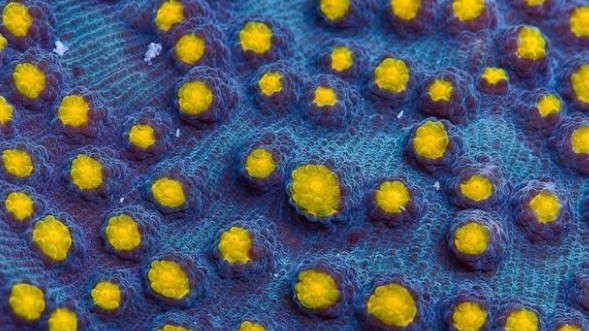
    General information In general, corals comng from the genus Stylocoeniella usually has an encrusting or massive type of coral growth. They colony often forms a mound where you can easily distinguished their highly developed corallite with a well developed and raise corallite wall. As for the Forest Fire Stylocoeniella, they are predominantly colored light green…

  • Sector 001 Favia

    General information In general, the genus Favia have large coral colonies that are circular in shape and comes in the form of massive, submassive and encrusting type. At a first glance, you can mistakenly identify Favia with Favites. However, with a closer look, Favia and Favites can easily be differentiated. Favites have corallite walls that…
  • Yellow Bandit Chalice

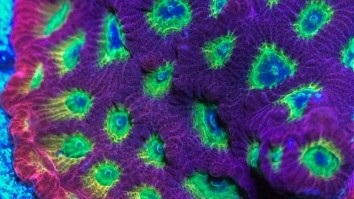
    General information In general, species from Echinophyllia has an encrusting growth where their colonies can form folds or cups. The corallites that are located at the middle are usually elevated with warty bumps. The color of their mouth usually has a different color from their fleshy body. For the Yellow Bandit Chalice Echinophyllia, they are…

  • Little Princess Favia

    General information In general, the genus Favia have large coral colonies that are circular in shape and comes in the form of massive, submassive and encrusting type. At a first glance, you can mistakenly identify Favia with Favites. However, with a closer look, Favia and Favites can easily be differentiated. Favites have corallite walls that…
  • Giant Star Coral

    General information In general, corals coming from the genus Moseleya have colonies that are flat, submassive, disc-like or free-living. They have a cerioid type of coralite with a large central corallite that can measure up to 35 millemeters in diameter. Their mouth have rows of fine teeth that usually exserts paliform lobes. For the Giant…

  • Orange Flowering Leaf Pavona

    General information In general, corals from the genus Pavona takes different coral lifeforms like massive, columnar, leaf-like or plate-like where this can be influenced by current, wave action, depth and lighting condition. Pavona can easily be identified since they have no corallite walls. Instead, their corallites have a shallow depression where each is clearly delineated…

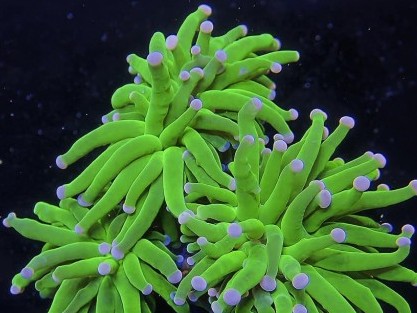
  • Pink Tipped Torch Euphyllia

    General information In general, corals from the genus Euphyllia have long tentacles that may stretch out 2 to 4 inches and are usually extended out most of the time. When the polyps are retracted, you can clearly see that each corallite is completely separated from each other and is encased by its own wall. For…

  • Raptors Peace Favia

    General information In general, the genus Favia have large coral colonies that are circular in shape and comes in the form of massive, submassive and encrusting type. At a first glance, you can mistakenly identify Favia with Favites. However, with a closer look, Favia and Favites can easily be differentiated. Favites have corallite walls that…