-
-
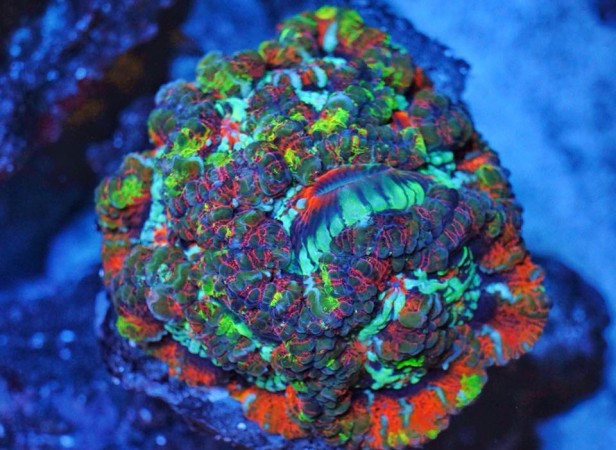
Two Faced War Favites
General information In general, corals from the genus Favites looks similar to a Favia coral. But having a closer look allows you to spot a major difference which makes Favites a unique coral genera. You have to take note that the corallite walls of Favia corals are fused while the Favites are not. Although it…
-
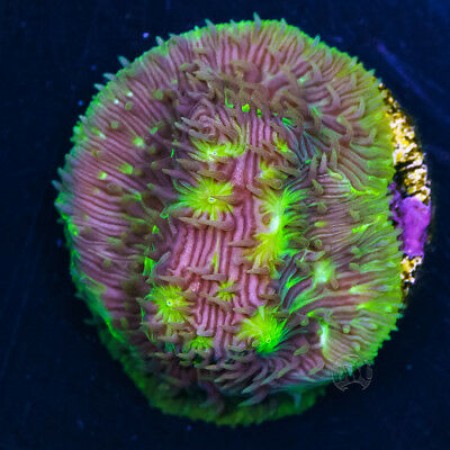
Aussie UFO Diaseris
General information In general, corals from the genus Cycloseris have polyps that are irregularly outlined and mostly composed of brittle wedges that can easily break off. Their mouth is usually colored yellow or beige with some green undertone both at the center and at the outer edges of their skeletal structure. For taxonomic purposes, Cycloseris…
-
Aussie Neon Ultra Favia
General information In general, the genus Favia have large coral colonies that are circular in shape and comes in the form of massive, submassive and encrusting type. At a first glance, you can mistakenly identify Favia with Favites. However, with a closer look, Favia and Favites can easily be differentiated. Favites have corallite walls that…
-
-
-
Kiwi Litho
General information In general, corals coming from the genus Lithophyllon have colonies that may take the form of plates, encrusting or flat laminae and usually has a lobed margin. Their corallites are scaterred in a random order and has no central corallite. They often have a uniform color and their tentacles may extend during daytim….
-
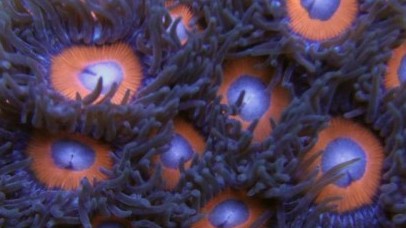
African Blues Zoanthids
General information <div class="more_detail"> <div class="more_detail">Zoanthids feature a hard exoskeleton and is considered one of the most durable inhabitants in a reef aquarium making them the perfect piece for newbie aquarist. Their appearance resembles like a cluster of miniature sea anemones that often creates a hard matting appearance. While they look similar with sea anemones,…
-
Arctic Infernos Zoanthids
General information <div class="more_detail"> <div class="more_detail">Zoanthids feature a hard exoskeleton and is considered one of the most durable inhabitants in a reef aquarium making them the perfect piece for newbie aquarist. Their appearance resembles like a cluster of miniature sea anemones that often creates a hard matting appearance. While they look similar with sea anemones,…
-
Black Cherries Zoas
General information <div class="more_detail"> <div class="more_detail">Zoanthids feature a hard exoskeleton and is considered one of the most durable inhabitants in a reef aquarium making them the perfect piece for newbie aquarist. Their appearance resembles like a cluster of miniature sea anemones that often creates a hard matting appearance. While they look similar with sea anemones,…